Know someone planning a yard project?
Start with the problem you want to solve.
Sod is usually the starting point when you want a living lawn, have suitable sunlight and can commit to watering while the grass takes root and ongoing care. Artificial turf is worth comparing when reducing mowing or creating a durable, grass-like surface matters more—but cleaning, drainage and summer heat still need a plan.
Neither fixes every yard. Replacing struggling grass without understanding why it failed can leave you paying for the same problem twice. Covering a wet area with artificial turf doesn’t, by itself, give that water somewhere to go.

Start by considering sod if…
- You enjoy a natural lawn and accept seasonal changes.
- The area receives enough light for a suitable grass.
- You can water it during establishment and maintain it afterward.

Start by considering turf if…
- You want to remove mowing from a particular area.
- You will clean the surface and manage pet use.
- You’re comfortable evaluating heat, base preparation and eventual replacement.
You can also combine surfaces: natural lawn where it performs well, a defined pet area, planting beds in difficult shade and paving where you walk most often. The whole yard doesn’t have to use one material.
Ready to plan installation? Compare artificial-turf base preparation and conversion from Bermuda to another grass.
Artificial turf vs. natural sod: the practical comparison
Sod is living grass supplied with roots and a thin layer of soil. Artificial turf is a manufactured surface installed over a prepared system. Compare the complete installation and care routine, not just how the samples look.
On smaller screens, scroll the table sideways.
| What matters | Natural sod | Artificial turf |
|---|---|---|
| Initial investment | Get a quote for the grass, removal and soil preparation. | Get a quote for turf, excavation, base, edging, seams, infill and drainage. |
| Sunlight | Grass selection must match available light. | Doesn’t need sunlight to grow; nearby trees and roots still affect the project. |
| Summer comfort | Living grass provides cooling, depending on condition and moisture. | Can become much hotter in sunlight; assess the exact product and exposure. |
| Water | Needs establishment watering, then weather-appropriate care. | No growth irrigation, but cleaning and pet-use rinsing may need water. |
| Routine work | Mowing, edging and appropriate lawn care. | Debris removal, brushing, cleaning and checking seams or infill. |
| Dogs | Wear routes and urine spots can be concerns. | Waste still needs removal; drainage and odor management matter. |
| Drainage | Requires suitable soil and surface drainage. | Requires a functioning base and drainage route, not just permeable backing. |
| Seasonal appearance | Warm-season grasses can become dormant and lose green color. | Keeps its manufactured color, with appearance affected by wear and care. |
| Recovery | Living grass can regrow where conditions allow; damaged areas may need repair. | Damaged fibers don’t regrow; repairs or replacement may be needed. |
| Best decision test | Can this grass thrive here with the care you will provide? | Will this system suit the site and the way you’ll actually use it? |
Natural sod is not one uniform option
Compare the named cultivar before comparing sod with artificial turf. Tifway 419, TifTuf and Celebration Bermuda differ in drought and shade performance; Raleigh and Palmetto St. Augustine differ in texture and site fit. Palisades Zoysia has a broader blade than fine-textured Zeon, Zorro and Emerald, which can change your mowing routine.
See the North Texas sod variety comparison for the differences and sources, then review establishment watering and aftercare. Local supply and the named variety in your estimate should be confirmed before installation.
North Texas sun changes the decision.
Do not choose natural grass from color alone.
Observe the actual lawn area in the morning, midday and afternoon. A bright backyard can still have a deeply shaded strip beside the house. Texas A&M emphasizes matching grass to the site, including light, traffic, irrigation and maintenance. Bermuda needs full sunlight; St. Augustine generally tolerates more shade, while Zoysia’s tolerance varies by cultivar. None makes deep shade irrelevant.
Source: Texas A&M AgriLife: Turfgrass Selection for Texas.
For the detailed grass decision, use our Best Grass for North Texas guide. Plano Landscaping’s Zoysia options are Palisades, Zeon, Emerald and Cavalier; the right one depends on the yard.

Artificial turf can look inviting while feeling hot.
Penn State’s surface-temperature research documents heat concerns on synthetic turf and examines cooling through irrigation. Much of this research concerns sports surfaces, so it doesn’t show the exact temperature of a particular residential product. It does support taking heat seriously instead of assuming a green surface feels like living grass.
Source: Penn State: Synthetic Turf Temperature Research.
Ask to see the proposed product outdoors, in sun, at a time you expect to use the yard. Discuss shade and how children or dogs will access it. A quick rinse isn’t a dependable all-afternoon cooling plan. If barefoot afternoon play is the main goal, give summer comfort as much weight as appearance.
For a closer look at the summer-use questions: review the artificial-turf heat guide.
For dogs, plan the cleaning routine before the surface.

A narrow dog run and a large family lawn have different demands. Start with the number of dogs, where they relieve themselves, whether they dig and the route they repeat along the fence.
With artificial turf
Ask how liquid moves through the backing and base, where it goes next and how you’ll rinse the area. Remove solid waste promptly and follow the selected product’s cleaning instructions. SYNLawn’s maintenance manual specifically notes additional care for pet odors and that infill products can have different flushing requirements. That’s manufacturer guidance, not a claim that we install that brand.
Source: SYNLawn: Care and Maintenance Manual.
“Pet-friendly” isn’t enough information for a quote. Ask for the turf and infill names, cleaning guidance and access to water. Read our pet turf planning guide for related questions.
With sod
Discuss repeated traffic before choosing a grass. A dog using the same route all day may need a designated path or a different surface in that strip. Fresh sod also needs protection while rooting; plan an alternative toilet and exercise area while the grass takes root. Our aftercare guide explains how to check rooting before increasing use.
Less watering does not mean “ignore the irrigation.”
EPA WaterSense recommends choosing grass suited to local conditions and managing watering and mowing appropriately. A natural lawn can be part of a water-efficient landscape, but its size and management matter. Consider keeping grass where you use it rather than filling every difficult corner with lawn.
Source: EPA WaterSense: Turfgrass and Water Efficiency.
If you choose sod
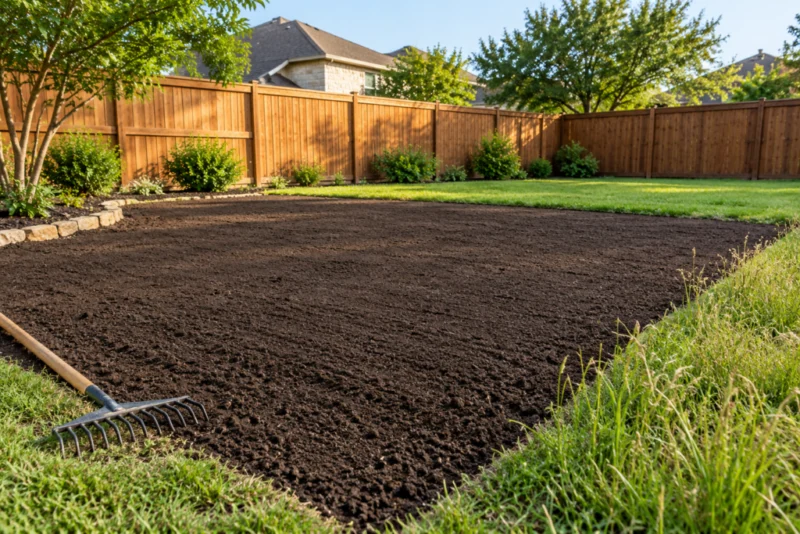
Confirm sprinkler coverage before installation, including corners and strips beside paving. New sod needs care while the grass takes root; don’t apply an established lawn’s routine on day one. Texas A&M’s establishment guidance emphasizes site suitability and preparation. Start with our watering and rooting guide, then check your city’s current watering rules and any new-landscape exemption process.
Source: Texas A&M AgriLife: Turfgrass Establishment.
If you choose artificial turf
Include irrigation changes in the scope. An existing zone may serve both the lawn being removed and plants you intend to keep. Ask which heads or lines should be capped, rerouted or retained, and how beds will continue receiving water. Keep a practical cleaning-water source where pet use needs it.
 Changing an irrigated lawn?Explore Sprinklers & Irrigation →
 Standing water after rain?Explore Yard Drainage →

The base matters as much as the grass-like surface.
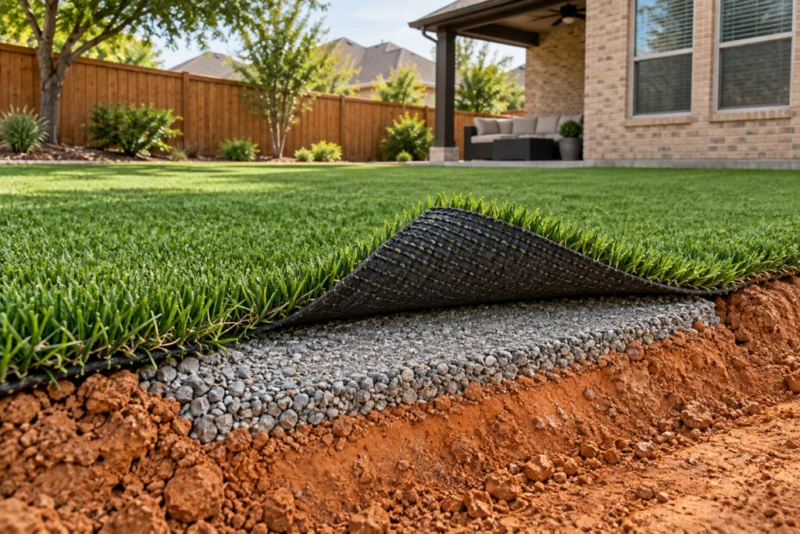
A product’s drainage specification describes one part of the system. Ask how the proposed base, site grade and outlet work together. The Synthetic Turf Council publishes installation and system guidance; your estimate should still explain the approach for your property. Don’t treat a generic layer illustration as construction instructions.
Compare the installed price and the years afterward.
Don’t compare sod-only material prices with a complete artificial turf installation. Request two scopes for the same area, with the same access and the same known site problems. Separate shared work—such as a drainage repair—from costs unique to either surface.
Your sod quote
- Grass variety and measured area.
- Existing grass removal, preparation and cleanup.
- Any grading, drainage or irrigation work.
- Establishment responsibilities and care instructions.
Your artificial turf quote
- Product, backing and infill specification.
- Removal, base preparation, edging and seams.
- Drainage and irrigation changes.
- Maintenance requirements and written warranty terms.
Plano Landscaping’s current sod starting rates are $2.35/sq. ft. for Bermuda, $2.45 for St. Augustine and $2.55 for Zoysia, with a 450-square-foot minimum. These are business-provided starting prices, not a market average or a final quote. Additional necessary work and applicable taxes affect the total. Use the sod cost guide and calculator for the current estimate assumptions.
Use your own numbers for ongoing cost.
Write down what you actually spend on lawn care, irrigation, seasonal treatments and repairs. For turf, allow for cleaning, brushing or professional maintenance as applicable, pet products, repair and eventual removal or replacement. Count your time separately if that’s part of the reason for changing.
Total over your chosen period = installation + routine care + water + repairs + replacement or removal allowances.
Illustrative math only: if one option costs $6,000 more initially and saves $600 annually, the simple recovery period is 10 years. That calculation excludes financing, inflation, repairs and replacement. Change the inputs, and the result changes.
There’s no guaranteed payback year for every North Texas yard. If your current mowing bill covers several areas and only one becomes turf, the entire bill may not disappear. Compare written estimates and realistic maintenance plans before calling either option the cheaper one.
Compare a complete turf proposal alongside the lawn quote: review turf installation cost drivers.
Which maintenance routine would you rather own?
Artificial turf removes mowing from that surface. It doesn’t remove leaves, dust, pet waste or wear. SYNLawn’s general care guidance includes brushing and rinsing; use the instructions for the specific turf and infill selected for your project.
Source: SYNLawn: Care and Maintenance.
Natural lawn routine
During active growth, plan mowing and edging, adjust watering to conditions and watch for uneven growth or stress. Diagnose brown patches instead of automatically adding water. Winter dormancy can change the color without meaning the lawn has died.
Learn sod care and troubleshooting →Artificial turf routine
Remove debris, clean pet areas and check flattened traffic routes, edges and seams. Ask what products and brushes are permitted. Ask how a damaged area would be repaired and whether a later patch might look different.
Review artificial turf installation →Warranty length and usable life are different questions.
Request the actual warranty, including exclusions, maintenance duties and who handles labor. A product warranty isn’t automatically a promise to replace the entire installation at no cost. Likewise, a sod installation needs appropriate care after it goes in. Get the responsibilities in writing for either option.
Environmental choices are broader than water alone.
Consider irrigation, mowing inputs, how much living planting you retain and what happens to removed material. Ask the turf supplier about the specific product and realistic local disposal or recycling options. Avoid deciding from a blanket “eco-friendly” label; reducing unnecessary lawn area or combining beds and usable lawn may be another option.
Leaning toward natural grass? Include establishment in the schedule. See when to install sod in North Texas →
Make the maintenance preference part of the whole yard plan: compare the chores involved in a low-maintenance yard.
Which yard sounds like yours?
These are planning examples, not customer case studies or guaranteed recommendations.
“We have a sunny yard and want real grass.”
Start with suitable sod options and an irrigation check. Compare how much mowing you accept and the traffic the lawn will receive. Good sunlight is an advantage, but preparation and aftercare still matter.
“The narrow side yard is always muddy.”
Find the water source first. Turf might provide a useful surface after the drainage problem is addressed; simply replacing the top layer isn’t the decision to start with.
“Our dogs have worn a track along the fence.”
Consider treating that route separately. Compare turf or a suitable path there while retaining living lawn elsewhere. Include cleaning access and afternoon heat in the plan.
“We barely use the lawn but keep paying to mow it.”
Compare turf with smaller lawn areas, planting beds or useful outdoor space. Reducing a chore is a valid goal; it doesn’t automatically mean the whole area should become synthetic grass.
“We want a soft play area under deep shade.”
Don’t keep replacing grass without checking the light. Compare suitable alternatives, tree-root considerations and the planned use. If play equipment is involved, ask about a properly specified impact-attenuating system; ordinary landscape turf alone doesn’t establish fall protection.
Bring these details to your estimate.
- Photos and approximate dimensions: include gates, steps, tree trunks and narrow access points.
- Sunlight and water: note shade through the day and take photos after rain.
- Use: describe dogs, play, entertaining and the routes people walk.
- Existing irrigation: say which beds or trees must remain watered.
- Your real priority: lower upfront cost, less mowing, summer comfort or year-round appearance.
- Property requirements: check applicable HOA or other restrictions before ordering materials.
Not sure which direction to take?
Tell us what isn’t working today. We can discuss sod, artificial turf and related preparation in the context of your yard.
Questions homeowners ask
Is artificial turf maintenance-free?
No. It avoids mowing and doesn’t require water for growth, but debris, pet waste, brushing and repairs still need attention. Ask for the selected product’s care instructions.
Will artificial turf fix a drainage problem?
Not by itself. The planned installation needs a route for water through and away from the system. Find the cause of standing water before choosing the surface.
Is sod ready for heavy use immediately?
No. It looks like a lawn immediately, but it still needs to root into the prepared soil. Follow establishment guidance and check rooting before increasing traffic.
Can we keep sod in front and install turf in back?
Yes, that's a layout we can discuss. Check sunlight, use, drainage and sprinkler changes in each area, plus any restrictions that apply to the property.
Which is better for a shaded yard?
Different grasses and varieties need different amounts of light. Artificial turf doesn't need sunlight to grow, but a shaded spot still needs drainage, protection for tree roots and regular debris removal. A planting bed may suit the space too.
Which lasts longer?
Living grass can last with the right conditions and care, though you may need to repair patches. Artificial turf wears out and can't grow back. Ask about the specific product's warranty and replacement needs; there isn't one lifespan for every lawn or turf product.
Sources and how to use them
Extension and research sources support the grass, water and heat discussion. Manufacturer and industry sources describe system and maintenance considerations; they aren’t independent endorsements of a product or a statement of the brands Plano Landscaping installs.
- Texas A&M AgriLife: Turfgrass Selection for Texas
- Texas A&M AgriLife: Turfgrass Establishment
- EPA WaterSense: Turfgrass and Water Efficiency
- Penn State: Synthetic Turf Temperature Research
- SYNLawn: Care and Maintenance
- SYNLawn: Care and Maintenance Manual
- Synthetic Turf Council: Technical Guidelines
Prices are user-provided starting rates; confirm current scope and pricing when planning your project. Illustrations don’t document a customer project. No universal savings, lifespan or ranking outcome is promised.
Explore the Knowledge Hub →Know someone planning a yard project?