Know someone planning a yard project?
01 / GET YOUR BEARINGS
Which grass is best for North Texas?
There is no single winner for every lawn. For an open, busy yard, start with Bermuda. For usable shade, compare St. Augustine. For a premium lawn where the site fits, put Palisades Zoysia on your shortlist. Below, we explain what would make us change that recommendation.
You don't need to recognize every variety to begin. First, work out how much light reaches the lawn, how hard the area gets used, and what you're willing to maintain. Think about the front and back separately: a sunny front yard and a shaded backyard may need different plans.
A useful starting point when sunlight and regular use are the priorities.
SOME SHADELook at St. AugustineWorth comparing where trees or the house reduce light, with shade limits in mind.
DENSE LAWN, SOME SHADEConsider ZoysiaLook closely at the specific variety and the mowing routine it needs.
What sounds most like your yard?
Use this to choose what to read first. It’s a starting point, not a site assessment.
Watch the same spots at several times on a clear day. A lawn that looks bright from the patio can still spend most of the day in shade.
Learn how to check your light →Planning to replace existing Bermuda? Use our lawn-conversion guide and pre-sod sprinkler checklist to plan the work before delivery.
COMPARE THE OFFER, THEN CHECK THE FIT
Good value, a shade-focused choice, or a premium lawn?
We arrange the options from our lower starting rate to our higher starting rate. That’s a budget comparison—not a ladder where paying more always gets you better grass for your yard.
GOOD VALUE · SUNNY YARDS
Bermuda
Start here for open sun, regular use and a lower installation budget. It may be the best choice for your property even when you can afford more.
Check the Bermuda fit →COMPARE FOR USABLE SHADE
St. Augustine
A better fit than Bermuda in some partly shaded areas. Choose it for the site and broad-bladed look, not simply because its starting price sits in the middle.
Check the St. Augustine fit →PREMIUM CHOICE
Palisades Zoysia
Premium feel · sun & partial shade
Our featured recommendation for suitable yards. Compare its texture, care and site fit before choosing the upgrade.
Why we recommend comparing Palisades →A recommendation isn’t a sales ranking. Final grass selection and cultivar pricing are confirmed for your property.
OUR PREMIUM RECOMMENDATION · WHEN YOUR YARD FITS
RECOMMENDEDWhy put Palisades Zoysia on your shortlist?
If you want a dense lawn and are ready to invest in the right preparation, Palisades is the Zoysia we recommend comparing first. That recommendation comes after checking the light, drainage, irrigation and how you use the space.
What makes it worth considering
Texas A&M’s Dallas breeding program describes Palisades as a medium-coarse-textured grass with heat and cold tolerance, shade tolerance and good fall color retention. It lists home lawns among its uses. That makes it a useful candidate for a North Texas lawn where the conditions suit it.
Read Texas A&M’s Palisades profile. These are grass traits, not a promise that every yard will perform the same way.
What would change our recommendation?
- A sunny, hard-used play area: Bermuda may be the more practical choice, especially when recovery and budget lead the decision.
- Less available light: compare St. Augustine and the exact Zoysia variety. Deep shade can rule out sod altogether.
- A dog wearing the same route: discuss a path or a change in access. A premium grass won’t make constant wear disappear.
- Standing water or uneven sprinklers: fix those problems before installing any grass.
Ask for Palisades by name
“Zoysia” is a family of grasses. Palisades, Zeon, Emerald and Cavalier are the four Zoysia varieties we install, and they aren’t identical. Ask to see the proposed texture and confirm its mowing needs, availability and price on your estimate. Our published Zoysia starting rate isn’t a separate confirmed Palisades quote.
02 / SIDE BY SIDE
Bermuda vs. St. Augustine vs. Zoysia
These are general tendencies for established lawns. Variety, soil, weather and maintenance can change the result. Newly installed sod needs care while the grass takes root regardless of its mature drought tolerance.
On a small screen, swipe the table sideways to compare all three.
| What matters to you | Bermuda | St. Augustine | Zoysia |
|---|---|---|---|
| Sun & shade | Best in full sun; shade is a weakness. | Generally the strongest shade option of these three; still needs light. | Some shade tolerance; varies considerably by cultivar. |
| Look & texture | Often fine-textured, especially hybrids. | Broad blades and a coarser appearance. | Ranges from medium/coarse to very fine and dense. |
| Traffic & recovery | Strong traffic tolerance and relatively fast repair during active growth. | Less suited to repeated heavy wear. | Can tolerate wear, but damaged areas fill back in more slowly. |
| Drought | Strong tolerance once established; green color isn’t guaranteed through drought. | Generally less drought tolerant than Bermuda or Zoysia. | Drought tolerant, with important differences between varieties. |
| Mowing commitment | Expect frequent mowing during active growth. | Usually maintained taller than Bermuda. | Slower growth can mean fewer cuts; sharp blades and cultivar choice matter. |
| Watch-outs | Shade, missed mowing and spreading into adjacent beds. | Heavy traffic, cold injury, chinch bugs and disease concerns. | Slow recovery, thatch and the care demands of finer varieties. |
| Starting installed rate* | $2.35 / sq. ft. | $2.45 / sq. ft. | $2.55 / sq. ft. |
*Plano Landscaping starting rates; 450 sq. ft. minimum. Taxes and any additional grading, drainage or irrigation work are separate. Specific varieties and scope require a quote.
Read the guidance: Texas A&M AggieTurf: Bermudagrass · Texas A&M AggieTurf: St. Augustinegrass · Texas A&M AggieTurf: Zoysiagrass · Texas A&M AgriLife: Turfgrass Selection for Texas · Texas A&M AgriLife: Zoysiagrass Lawn Management Guide · Texas A&M AgriLife: Bermudagrass Home Lawn Management Calendar
03 / THE BIGGEST FILTER
“My yard gets some sun.” How much is some?
A quick look out the window isn't enough to judge a shaded lawn. The house may block the morning sun, a fence may take the afternoon light, and tree shade changes as the canopy grows. Look at the exact patch where you want grass—not just whether the yard feels bright.
Open sun
Few obstructions for much of the day. Put Bermuda on the shortlist, then compare appearance and care.
Moving or partial shade
Notice when direct light reaches the ground. Compare St. Augustine and the particular Zoysia being offered.
Deep, persistent shade
Under a dense canopy or between structures, none of these may be reliable. Consider a different use for the spot.
Qualitative light guide, not a measured sunlight score.
Make a simple sunlight record
- Pick a few fixed spots. Include the thinnest area, an open area and the edge beneath the trees.
- Check through the day. Record direct sun, filtered light or full shade at regular intervals. Time-stamped photos help you compare.
- Think about the season. A leafless tree in winter can make a summer shade problem easy to miss. Note future tree growth, too.
Four hours isn't a universal promise
AgriLife describes a minimum of about 4–6 hours of light for St. Augustine to survive, with results affected by cultivar and the kind of shade. That isn’t a guarantee of a thick lawn at the lower end. Filtered light and a solid building shadow are different conditions.
If you've replaced sod under the same tree more than once, pause before buying another pallet. A mulched bed or shade-adapted planting may be a better use of that space.
Read the guidance: Texas A&M AgriLife: St. Augustinegrass Lawn Management
04 / MEET THE GRASSES
Bermuda: a strong candidate for an open yard
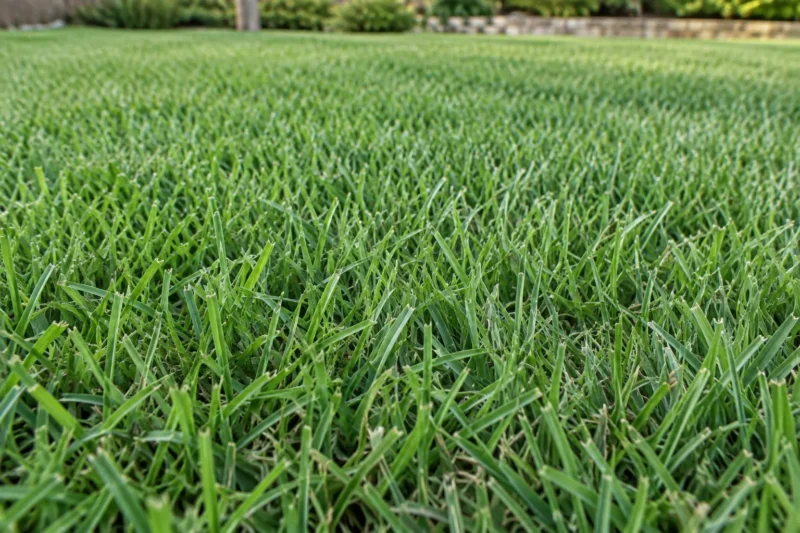
Picture an open backyard with room to play and very little tree cover. Bermuda is often the first grass worth considering there. Its ability to spread and repair wear is one of its useful strengths.
What you'll probably like
Bermuda handles heat and foot traffic well. It can recover well while actively growing, and hybrid types can give you a fine, dense lawn. Those traits make it worth considering for a yard that gets used.
What can be frustrating
Shade is its main limitation. It also needs regular mowing, and its spreading growth means you'll need to maintain the lawn's boundary around beds. A vigorous lawn isn't necessarily a low-effort lawn.
Put it on your shortlist if…
- The lawn is open and sunny.
- Play or foot traffic matters to your choice.
- You’re happy to keep up with mowing.
Pause if…
The trouble spots sit beneath dense trees or beside a shaded wall. A more expensive Bermuda variety can’t be assumed to solve that problem.
Read the guidance: Texas A&M AggieTurf: Bermudagrass · Texas A&M AgriLife: Bermudagrass Home Lawn Management Calendar
A useful question at the estimate: “Which Bermuda are you quoting, and is its mowing routine realistic with the mower I own?”

St. Augustine: worth a closer look around shade
If your lawn has trees, St. Augustine will probably come up in the conversation. It generally tolerates shade better than the other two grasses here. The important word is “tolerates”: enough light still has to reach the leaves.
What makes it different
Its broad blades give the lawn a visibly coarser texture. It’s generally kept taller than Bermuda and spreads through above-ground runners. That familiar, full-looking lawn is a different aesthetic from a tightly cut fine-bladed surface.
Where it needs thought
Repeated heavy traffic is a weakness, and cold tolerance matters in North Texas. Disease and chinch bugs can also cause trouble. A brown patch shouldn't automatically be treated as a request for more water.
Put it on your shortlist if…
- The site has usable light but some shade.
- You like a broad-bladed lawn.
- Most use is ordinary household activity.
Pause if…
A dog runs the same narrow route all day, or the proposed lawn spends nearly all day in deep shade. Grass choice alone may not solve either situation.
Read the guidance: Texas A&M AggieTurf: St. Augustinegrass · Texas A&M AgriLife: St. Augustinegrass Lawn Management
A useful question at the estimate: “Does this exact variety make sense for both the light here and our winter conditions?”

Zoysia: look past the name on the quote
Zoysia isn't one uniform product. Two varieties can look and behave quite differently. Choosing by the word “Zoysia” alone is a bit like choosing flooring without deciding between the actual materials and finishes.
The appeal
Zoysia can form a dense lawn with some shade tolerance. Its texture ranges from coarser leaves to very fine blades. The slower growth can reduce mowing frequency, although it doesn't remove the need for routine care.
The tradeoff
Slower growth also means slower repair after damage. Fine-textured varieties can require more particular mowing, and stiff blades need a sharp mower. Thatch can become a maintenance concern.
Put it on your shortlist if…
- You value a dense appearance.
- You can compare named varieties.
- You can match the mowing routine to the selection.
Pause if…
You expect a repeatedly worn strip to repair itself quickly, or you're choosing a fine variety solely from a photograph without discussing mowing equipment.
Read the guidance: Texas A&M AggieTurf: Zoysiagrass · Texas A&M AgriLife: Zoysiagrass Lawn Management Guide
A useful question at the estimate: “Show me the texture of the variety you recommend, and tell me how I would mow it.”
COMPARE THE NAMED VARIETY
North Texas sod varieties: what changes within each grass type?
A grass family is only the starting point. North Texas supplier listings include the varieties below; stock, suitability and variety-specific pricing must be confirmed for your project. A cultivar name on your written quote helps you compare like for like.
Bermuda: Tifway 419, TifTuf and Celebration
Tifway 419 is a familiar fine-textured hybrid for sunny lawns and active spaces. TifTuf was selected for drought tolerance; it is worth comparing when water efficiency is a priority, but new sod still requires establishment watering. Celebration offers strong wear recovery and improved shade performance relative to some Bermuda varieties. It is not a solution for deep shade.
St. Augustine: Raleigh and Palmetto
Raleigh is a familiar medium-textured option known for cold hardiness. Palmetto has a finer texture and is marketed for shade tolerance. Compare the actual light reaching your lawn and the grower’s maintenance guidance; neither variety thrives without enough usable sunlight.
Zoysia: Palisades, Zeon, Zorro and Emerald
Palisades has a broader blade than the fine-textured options and remains our first variety to discuss when the site fits. Zeon is dense, fine-textured and relatively low-growing. Zorro is another fine-textured option selected for improved shade tolerance. Emerald is a fine-textured hybrid with a dense appearance. Fine-textured Zoysias generally call for closer mowing and more attention to mowing equipment than broader-bladed types.
Other regional options, including Cavalier, may be available by supplier. Ask about sourcing before assuming a named variety is included.
Next, review installation pricing and what changes the quote, new sod watering and aftercare, or calculate your installation budget.
Sources: North Texas supplier varieties · Texas A&M Bermuda guide · TifTuf grower specifications · Raleigh and Palmetto traits · Zoysia cultivar traits · Texas A&M Zoysia care
06 / PUT IT INTO PRACTICE
Which of these yards sounds like yours?
These are planning examples, not customer case studies. Use them to spot the questions that matter on your property.
Sunny backyard, kids and a dog
Read the Bermuda profile first. Then mark the hardest-used route on a sketch. Even a suitable lawn needs a break from constant concentrated wear; a path between the gate and patio may be useful.
Compare Bermuda’s strengths →Mature trees, thinning grass below
Check the light before choosing sod. St. Augustine may be worth considering where light is adequate. If it stays deeply shaded, expand the bed instead of assuming another grass will fill in.
Do the sunlight check →A front lawn chosen for appearance
Compare actual samples. If several grasses suit the site, texture and mowing become useful deciding factors. Look at the sample from standing height as well as up close.
Understand Zoysia varieties →One corner stays wet after rain
Sort out the water first. Changing grass doesn’t explain why that corner stays wet. Photograph where water enters and collects, then discuss the drainage before covering the ground again.
Explore yard drainage →There's no need to force one answer onto every square foot. You might keep the sunny lawn, turn the darkest corner into a bed, and add a small walkway along a worn route. That's a landscape plan built around how the yard works.
07 / THINK BEYOND INSTALLATION DAY
What will living with this grass be like?
Watering isn't a fixed-minute recipe
Your sprinkler output, rainfall, soil and root depth all affect watering. For established grass, folded or dull blue-gray leaves and lingering footprints can signal moisture stress. Check the soil and coverage before simply lengthening every zone's runtime.
A drought-tolerant grass can still lose color under drought. And newly laid sod isn't an established, deep-rooted lawn: it needs a separate rooting-in routine.
Read the guidance: Texas A&M AgriLife: Lawn Water Management
Mow for the grass, not the calendar
Use the recommended height for the actual variety. Follow the one-third rule: avoid taking off more than a third of the leaf height at one cut. During fast growth, waiting until the usual weekend may be too long.
For Bermuda home lawns, AgriLife commonly recommends 1–2 inches with a rotary mower. AggieTurf lists 2.5–3.5 inches for St. Augustine. AgriLife’s newer Zoysia guide gives 1–2.5 inches for coarser types and 1–2 inches for fine types. Confirm the range for your cultivar before adjusting the mower.
Read the guidance: Texas A&M AggieTurf: St. Augustinegrass · Texas A&M AgriLife: Zoysiagrass Lawn Management Guide · Texas A&M AgriLife: Mowing Recommendations · Texas A&M AgriLife: Bermudagrass Home Lawn Management Calendar
Winter color is part of the decision
These are warm-season grasses. They can turn straw-colored and become dormant after frost. If an evergreen-looking lawn is your expectation, talk about seasonal appearance before ordering. Brown in winter and a spreading brown patch during active growth are different situations; don't diagnose either from color alone.
Read the guidance: Texas A&M AgriLife: Turfgrass Selection for Texas
KEEP THIS FOR INSTALLATION DAY
The first 90 days deserve their own plan
Our aftercare guide covers watering checkpoints, rooting, the first mow, weeds, browning and city watering guidelines. Use it after choosing your grass.
Open the Sod Aftercare Guide →
Once you have a grass in mind, choose the season. Compare installation timing for Zoysia, Bermuda and St. Augustine →
08 / PUT THE DIFFERENCE IN DOLLARS
What does the grass choice change in the budget?
Need a starting measurement? Use our free lawn square footage calculator to trace the lawn on a satellite map, excluding patios and planting beds. Then estimate your sod installation cost. Measurements and prices are approximate until we assess your property.
For a simple starting comparison, here is what our current installed rates mean for the same 1,000-square-foot lawn. These are budgeting examples before tax and additional site work—not fixed quotes.
Bermuda
$2,3501,000 sq. ft. × $2.35St. Augustine
$2,4501,000 sq. ft. × $2.45Zoysia
$2,5501,000 sq. ft. × $2.55In that example, the difference between Bermuda and Zoysia is $200 before tax. If both suit your site, that helps put the decision in perspective. If one doesn't suit the site, saving on the initial rate won't make it a better choice.
Our installation minimum is one pallet, or 450 sq. ft. Preparation, access and the variety you choose affect the final job. These examples exclude extra grading, drainage and irrigation work.
Why does one grass cost more than another?
Growing the grass is part of the cost. Zoysia grows slowly, so producing a harvestable crop can tie up a farm’s land and care for longer. UGA Extension identifies slow growth and higher up-front investment as Zoysia drawbacks. The exact growing cycle depends on the variety, weather and farm; we don’t apply one fixed harvest time to every grass.
Transport and handling matter too. A heavier load can need more hauling capacity, but weight isn’t a reliable price ranking by grass type. Soil, cut thickness and moisture change pallet weight, and the ranges overlap. Our installed rates reflect the grass, supply and work involved.
Planning sod delivery
The charge covers fuel, travel time, loading the trailer and unloading at your property. Moving sod means moving soil and moisture along with the grass.
| Sod type or condition | Typical coverage | Approximate pallet weight |
|---|---|---|
| Bermuda | ~450 sq. ft. | 1,800–2,500 lb |
| St. Augustine | ~450 sq. ft. | 2,000–3,000 lb |
| Zoysia | ~450 sq. ft. | 2,000–3,000 lb |
| Very wet sod, any type | ~450 sq. ft. | 3,000+ lb |
These are our approximate planning ranges, not fixed weights for every farm or grass variety. Cut thickness, soil and moisture change the load. Fulton Grass reports about 2,000–3,000 lb for its 450 sq. ft. pallets; The Grass Outlet explains that moisture increases sod weight. The ranges overlap, so grass type alone doesn’t tell us what a truck will carry.
For a very large lawn, we confirm the number of pallets, access and installation schedule before you approve the work.
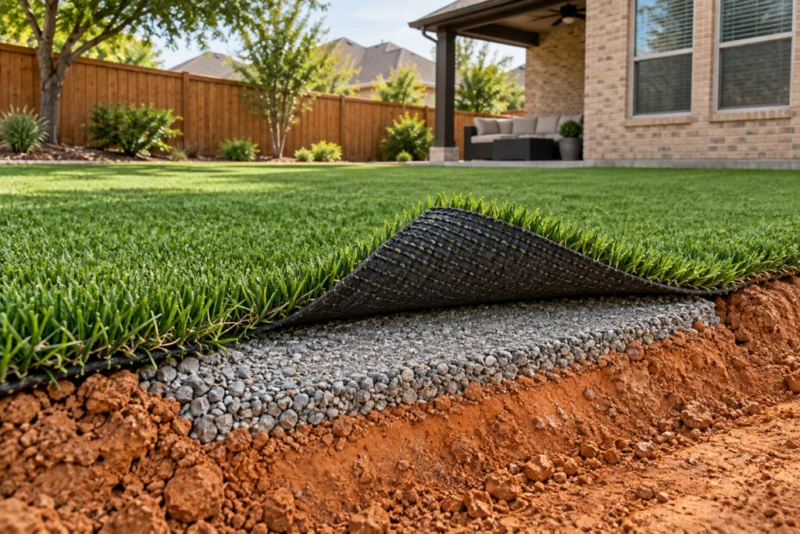
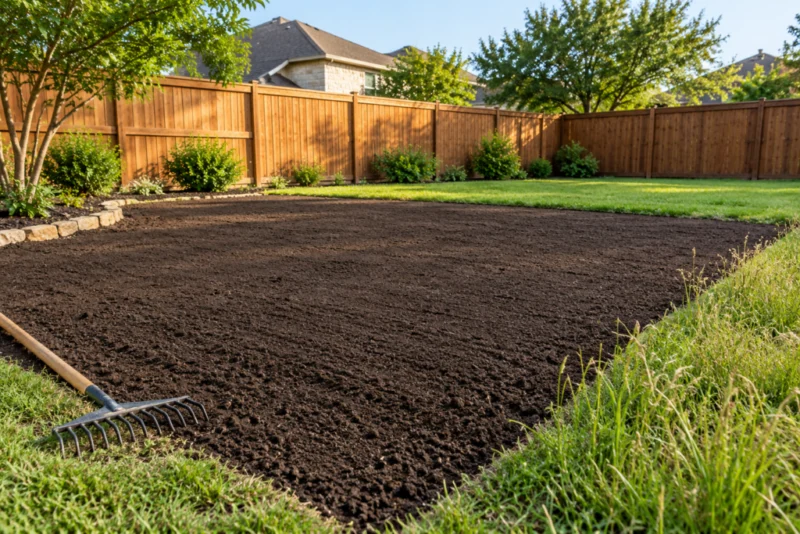
We remove the old grass, do light grading, add a layer of fresh nutrient-enriched compost/topsoil and smooth the surface before laying sod. Severe grading or leveling can need more soil and labor, which cost extra. Irrigation repairs, difficult yard access and heavy rock, trash or debris removal can also raise the price. Existing drainage problems need to be addressed before new sod goes in.
Explore installation pricing & the sod calculator →09 / MAKE THE NEXT CONVERSATION USEFUL
Before you order, walk the yard once more
Take a few photos and make a rough sketch. It doesn't have to be precise. Label the areas you want replaced, the spots that stay shaded, the dog route and any standing water. Bring those observations to the estimate.
- Name the grass. Get the type and variety written down, especially if matching an existing lawn.
- Explain the old problem. If the last lawn failed, describe when and where it started rather than simply requesting new sod.
- Check the watering plan. Know who will look after the new lawn and review your city’s current rules or any required establishment exemption.
- Agree on the finished scope. Clarify removal, soil preparation, access, cleanup and any separate irrigation or drainage work.
You don't have to arrive knowing the answer. “I want a lawn here, but this corner gets shade and this strip wears out” is a much more useful starting point than choosing a grass from a single pretty photo.
Ready to narrow it down for your yard?
Share your address, a few photos and the areas you want to replace. We'll use that as the starting point for your sod installation estimate.
A grass choice cannot explain every existing bare patch: check light, soil and watering before replacement.
A FEW MORE GOOD QUESTIONS
Questions that come up when choosing sod
Can I use one grass in front and another in back?
You can plan the areas separately. First decide whether they really have different growing conditions or uses. If they meet without a clear boundary, discuss how you’ll manage the transition and the different care requirements.
Can I put new sod right over the struggling lawn?
Don't make that your starting assumption. The old lawn may be struggling because of light, water, soil conditions or wear. Have the site assessed and agree on removal and preparation before delivery. A new surface can hide an unresolved problem for a while.
Is the most expensive grass automatically the best?
No. Choose from the grasses that fit the site first, then compare texture, upkeep and price. Paying more for a grass that needs conditions your yard can't provide isn’t an upgrade.
Can I match a small patch from a photograph?
A photo is useful context, but it may not establish the cultivar. Share any previous invoice or sod label and ask how a repair will compare with the existing lawn. Lighting and mowing can make the same grass look different in pictures.
Will any of these grasses stop all weeds?
No grass choice guarantees a weed-free lawn. Focus on building a healthy stand and identifying the cause of thin areas. Don’t choose a treatment from a weed photo alone; the grass type and the product’s permitted uses matter. See the Sod Aftercare guide for the new-lawn discussion.
Do I need to pick a variety before requesting an estimate?
No. It's fine to start with your priorities and photos. A useful estimate should help you understand the recommendation, the named grass, the preparation and the care it will need.
Sources & further reading
Grass traits and care guidance were checked against Texas A&M AgriLife and AggieTurf. Yard scenarios and the selection tool are editorial applications of that guidance, not field trials or guarantees. Prices are Plano Landscaping's supplied starting rates. The four Zoysia installation offerings—Palisades, Zeon, Emerald and Cavalier—were confirmed by Plano Landscaping. Bermuda and St. Augustine variety names are educational examples, not a current inventory list.
- Texas A&M AggieTurf: Bermudagrass
- Texas A&M AggieTurf: St. Augustinegrass
- Texas A&M AggieTurf: Zoysiagrass
- Texas A&M AgriLife: Turfgrass Selection for Texas
- Texas A&M AgriLife: St. Augustinegrass Lawn Management
- Texas A&M AgriLife: Zoysiagrass Lawn Management Guide
- Texas A&M AgriLife: Mowing Recommendations
- Texas A&M AgriLife: Lawn Water Management
- Texas A&M AgriLife: Bermudagrass Home Lawn Management Calendar
Grass and care references rechecked October 12, 2026, including the Texas A&M Dallas Palisades profile. Yard scenarios and the selection tool are planning guidance, not a site assessment. Confirm current availability, variety-specific pricing, light and mowing requirements in your estimate. Pallet weights are approximate planning ranges; confirm the actual load with the supplier. No Texas A&M endorsement is implied.
More from the Knowledge Hub →Once you’ve chosen the grass, use our North Texas sod installation calendar to compare seasonal timing and plan the work.
Know someone planning a yard project?