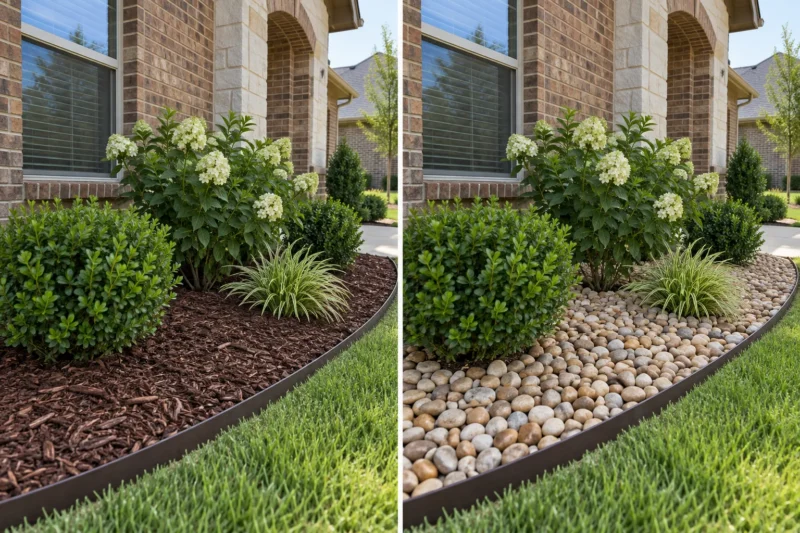
Know someone planning a yard project?
What are you building?
Start with your project and site conditions, compare the materials for that space, then check the installed scope and local samples before requesting an estimate.
Start with the job, then choose the look. A stone you like in a planting bed may be awkward under a dining chair. A bag marked “sand” may not be the sand specified for your paving system. The name alone isn’t enough.
BUILD A SHORTLIST
Find materials for your project
Choose the job, look and upkeep preference. These suggestions start a conversation; they don’t specify a drainage or structural design.
Choose your preferences, then select “Show My Shortlist.” The project sections below remain available without the tool.
Before you choose a material
Walk the yard after rain and again on a hot afternoon. Mark the areas where water sits, where people walk and where the sun reaches the ground. Bring photos of those places—not only inspiration photos.
For a narrow side yard, the first question may be how to keep a gate usable. For a patio, it may be room for chairs and a stable route from the house. For a failing lawn, it may be irrigation or shade. Changing the surface without checking the problem can leave you paying for the same work twice.
- Describe the use: walking, dining, pets, planting or vehicle access.
- Check water movement before adding soil or covering the ground.
- Ask how the finished height meets doors, drains, fences and adjacent surfaces.
- Compare a physical sample beside your house, wet and dry.
- Discuss access for delivery and removal of existing material.
Drainage materials are parts of a system
Resolve water movement before choosing the finished surface. Then compare the lawn, beds or paving that will sit above the preparation.
A catch basin collects surface water. Pipe carries water along a planned route. Aggregate and a specified filter material may be part of the assembly. Those parts aren’t interchangeable, and the destination for the water matters as much as the inlet.
Don’t order a particular pipe or rock size from a photograph. Ask for the purpose, route, outlet, cleanout access and maintenance plan. Pipe material, connections and filtration need to fit the job.
Start with French drains, surface drains and grading. That guide helps separate problems before you compare components.
Sod, Soil & Lawn Preparation
Choose the grass before ordering soil
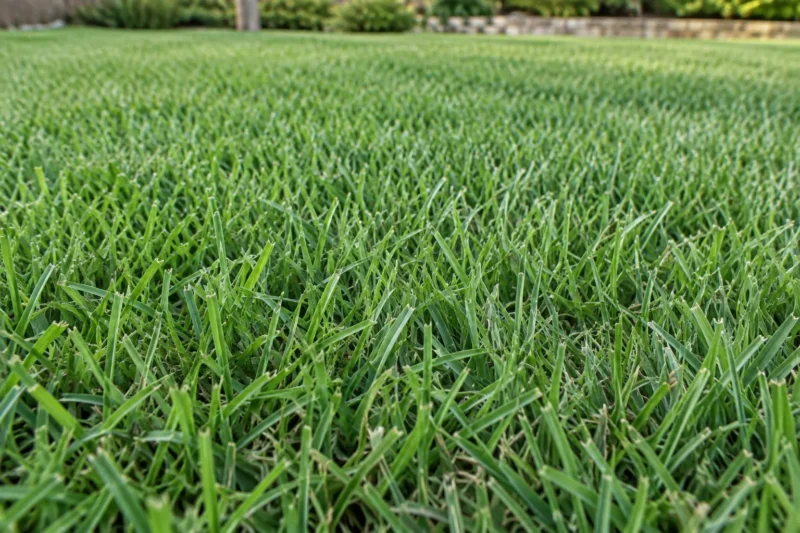
Bermuda
Compare Bermuda for the sunny parts of your yard. Discuss the specific variety, foot traffic and mowing plan.
Compare grass options →
St. Augustine
Include St. Augustine in the comparison when evaluating your yard’s light and maintenance needs. Confirm the cultivar rather than choosing by appearance alone.
Compare grass options →
Palisades Zoysia
Premium feel · sun & partial shade
Our featured recommendation for suitable yards. Compare Palisades with the other grasses based on sunlight, use and care—not price alone. Confirm the cultivar and quote for your property.
Compare grass options →Irrigation is required. Plano Landscaping will NOT install new sod on lawns without irrigation. Plan any sprinkler installation or repairs and resolve drainage problems before laying sod.
Explore sod installation and pricing →
Materials for the ground underneath
Screened topsoil
Soil for the preparation and grading plan. Screening alone doesn’t specify texture or fertility.
Confirm soil quality and finished levels.
Color / appearance: Brown soil; texture varies by source.
Compost
Decomposed organic material used as a soil amendment.
Confirm source and incorporation method.
Color / appearance: Dark brown organic material.
Masonry sand
A named sand product—not a universal fix for soil or paving.
Use the specification for the intended system.
Color / appearance: Light tan; confirm the specified sand.
Planting mix
A blended medium for a specified planting use.
Check ingredients and intended application.
Color / appearance: Brown blend; ingredients vary.
Illustrative material samples. Confirm the supplier’s current product, color and size before ordering.
Texas A&M’s soil preparation guidance distinguishes soils and amendments. Ask what your soil needs before ordering a truckload of an ingredient.
Our sod preparation includes light grading, nutrient-enriched compost/topsoil and smoothing. Severe grading, extra soil and debris removal can add to the work. Existing drainage problems need attention first. Plano Landscaping will NOT install new sod on lawns without irrigation. Plan irrigation installation or repairs before sod.
For the grass itself, compare Zoysia, Bermuda and St. Augustine. Palisades is our featured option for suitable yards, not a universal upgrade. Use the installation calendar and sod cost guide to plan timing and budget.
Artificial turf: a different lawn routine
Compare artificial turf alongside sod when choosing a new lawn. Turf avoids mowing, but still needs debris removal, product care and pet-waste cleaning. The base, drainage, summer exposure and changes to existing irrigation belong in the installation plan.
Mulch options for landscape beds
Hardwood mulch
A shredded organic finish for planted beds.
Plan replenishment and leaf cleanup.
Color / appearance: Natural brown; compare the actual batch.
Cedar mulch
Natural wood texture and warm color.
Confirm the actual mulch composition.
Color / appearance: Warm tan to brown.
Black mulch
A dark finish that contrasts with green planting.
Color does not specify quality or ingredients.
Color / appearance: Black dyed finish.
Pine bark
A chunkier organic texture for comparison.
Check piece size and containment.
Color / appearance: Reddish brown bark.
Illustrative material samples. Confirm the supplier’s current product, color and size before ordering.
For a bed you regularly replant, start by comparing organic mulch. For a more permanent decorative area, rock may be worth discussing. Neither choice makes weeds or fallen leaves disappear.
Utah State University Extension describes the differences between organic and mineral mulches. Organic material breaks down; stone remains and needs a different cleanup routine. The choice should account for the plants as well as appearance.
Read Mulch vs. Rock for North Texas Landscape Beds before switching. Plant selection is a separate decision: compare mature size, sunlight and watering needs rather than choosing from a nursery photograph alone.
Decorative rock, gravel & decomposed granite
River rock · earth tones
Rounded pieces with a natural mixed appearance.
Compare current sizes and a physical sample.
River rock · mixed colors
A broader color mix for decorative areas.
Supplier names and batches vary.
Pink gravel
An angular, warm-toned aggregate appearance.
Confirm the actual product and grading.
Color / appearance: Pink and warm earth tones.
Decomposed granite
A finer-textured option to discuss for paths and transitions.
Compare loose and stabilized systems.
Color / appearance: Warm tan; confirm the local selection.
Illustrative material samples. Confirm the supplier’s current product, color and size before ordering.
Trade names help you find samples, but they don’t promise a uniform batch. “Brazos,” “rainbow” and “Texas pink” describe products you may encounter at local yards. Ask the supplier to identify the current product, size range and source. Availability and color vary.
A flagstone-and-DG path can combine a defined stepping route with a softer-looking surrounding surface. Discuss how the joints, edges and underlying construction will be maintained. Compare DG and gravel for paths before choosing the fill between stones.
Decorative rock doesn’t prove a drainage outlet. If the yard holds water, start with a drainage assessment before buying rock to cover it.
Hardscape materials for paths, patios & borders
Concrete pavers
Regular units for a defined paving layout.
Specify the base, edges and joints.
Color / appearance: Compare the selected manufacturer’s color blends.
Natural flagstone
Irregular stone with variation in shape and color.
Discuss thickness, support and joint treatment.
Color / appearance: Natural cream, tan, brown and gray variation.
Clay brick
A familiar warm-colored paving appearance.
Confirm an appropriate paving product and installation.
Color / appearance: Compare red, brown, tan and gray cards below.
Chopped limestone
Cream-colored stone to consider for borders.
A border and a retaining wall need different designs.
Color / appearance: White and cream; stone choices below include other tones.
Illustrative material samples. Confirm the supplier’s current product, color and size before ordering.
Concrete, concrete pavers and natural stone can all belong on a shortlist. The useful comparison includes the full construction, not just a price per square foot for the visible material.
A permeable pavement is a designed system. CMHA’s construction guidance explains that soil conditions and the base design affect how water is handled; some systems need drainage rather than relying on infiltration. Ordinary pavers or a gravel finish should not be labeled a drainage solution by default.
Use our existing concrete, pavers and stone comparison for the deeper decision, then see patios and walkways.
Borders and retaining walls need different decisions
Once the surface is chosen, decide how to contain it. Compare a simple bed edge first, then review retaining-wall materials only where soil needs support.
A border keeps a bed visually separate from the lawn. A retaining wall holds back soil. A taller stack of border stone doesn’t automatically become a suitable retaining structure.
Austin stone is a popular border option in our work. Compare the proposed stone, height, joints and finished edge with the house and planting bed. For a slim edge, discuss flexible board or metal where appropriate to the project; confirm the proposed product in the quote.
See Benda Board vs. stone, stone borders and retaining walls. Concrete, reinforcement and wall drainage belong to the designed assembly, not a homeowner shopping list based on appearance.
Stone choices for flower beds & tree rings
Start with a sample beside your house. Then choose the border height, curve and joint finish. These local trade names help narrow the search, but the quote should name the actual product.
Austin white / cream limestone
A light-colored border to compare beside brick, mulch and lawn. Ask for the actual white or cream selection; those names don’t guarantee matching batches.
Oklahoma chopped stone
An earth-toned option to compare for a more rustic border. Ask which Oklahoma product is quoted; the name alone doesn’t specify color, dimensions or stone type.
Lueders limestone
Compare cream and charcoal selections and sawn-and-chopped finishes. A flatter sawn face changes the look of the border; confirm which faces will remain visible.
Granbury / Milsap stone
Additional local chopped-stone choices worth sampling. Compare the current yard selection with Austin and Oklahoma before settling on its color and texture.
Illustrative samples—not exact supplier products. Compare current stock and a physical sample. JBS Express’s local chopped-stone guide covers Austin, Oklahoma, Granbury and Milsap; Whiz-Q’s product list includes cream and charcoal Lueders.
Brick colors & finishes
Compare these named paving-brick products in Acme’s catalog. Look at the color variation and texture, then review a physical sample beside your house. Joint color and laying pattern also change the finished appearance.

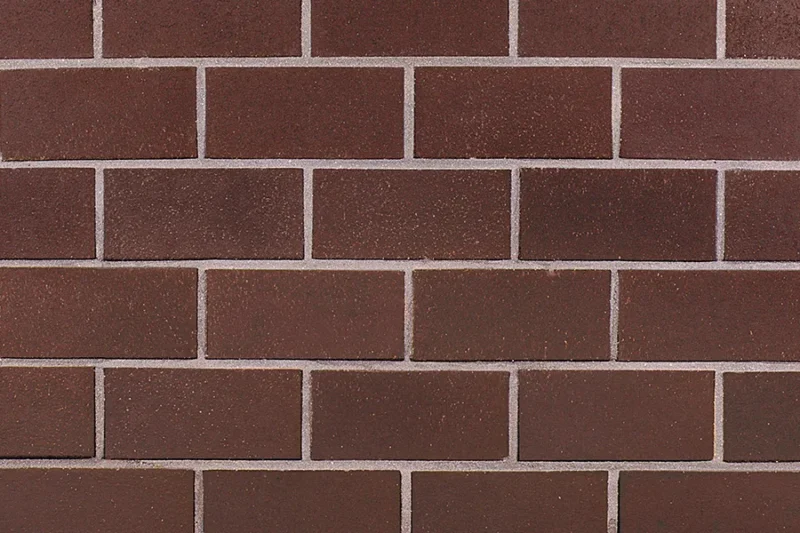


Product photos: Acme Brick catalog. These are supplier-listed examples, not a stock guarantee. Ask Acme’s DFW showroom about availability and physical samples. Confirm the product, intended use and installation scope with us before ordering.
A face brick, thin veneer and paving brick are not interchangeable. Confirm that the selected product suits the border, walkway or patio you are planning.
Other border choices to compare
Brick or concrete edging units give a different, more regular pattern. Steel and aluminum make a slimmer edge; flexible Benda Board works with curves. Choose an edging product intended for the job—not leftover patio material by appearance alone. A retaining wall needs its own design.
Tree rings: protect the tree first
A tree ring can define the mulch area without becoming a raised planter. Keep the trunk flare exposed, avoid adding soil over established roots, and plan installation around roots instead of cutting through them. Where a stone border would disturb roots, a simple mulch edge may be the better choice. See Extension guidance on protecting roots.
Explore stonework and bed edging →Retaining-wall materials available in North Texas
Retaining-wall materials need to suit the soil, height, slope and loads behind the wall. Start with the required wall system, then compare its face, color and cap.

Segmental concrete wall blocks
Compare purpose-made retaining-wall systems with compatible corners and caps. Whiz-Q in Fort Worth lists Belgard Diamond Pro Quarried Face; regional colors and finishes depend on the product.
The base, drainage, reinforcement and wall geometry must suit the site. A product name alone doesn’t prove a safe wall height.

Natural stone wall materials
Discuss limestone, sandstone and larger stone units for the proposed design. Local stone yards carry several formats; small flower-bed edging pieces aren’t a substitute for a specified retaining-wall assembly.
Stone size, construction method, foundation and drainage—not just Austin, Oklahoma or Lueders as a color preference.

Low garden-wall systems
For a small bed or planter, compare a system intended for low walls. Whiz-Q lists Melville Wall with a smooth face and matching cap. Its stated limits don’t make it suitable for every retaining project.
A garden border, freestanding wall and structural retaining wall do different jobs. Confirm the intended application before choosing.
Images illustrate material families and construction, not the named supplier products. Follow the supplier links for actual product photos. Confirm current local stock, colors, caps and delivery before ordering.
Gray, tan and blended palettes are available across Belgard’s wall collections, but the range varies by region and system. Ask to see the block and cap together. Our retaining-wall service page explains planning, drainage and project requirements.
Wood, composite and the hardware you don’t see
For structures above the landscape, choose the material first, then its layout, finish and hardware. Fence wood and stain options come next, followed by pergola systems.

For a fence or pergola, ask for the wood species, grade, treatment where needed, finish and compatible fasteners. For decking, compare a named composite product against the actual wood option. “Wood” and “composite” each cover products with different instructions.
Bring samples into the sun and look at them beside the house. Ask about cleaning, finish renewal, replacement boards and the written warranty. A color you like indoors may look different outside.
Our wood vs. composite deck guide covers that choice. For other structures, explore fencing and pergolas.
Pergola materials you’ll find around Dallas–Fort Worth
Start by comparing cedar and aluminum, then ask whether another specified product fits your project. These are locally advertised options, not a sales-volume ranking or a promise that Plano Landscaping installs every system below. Confirm the material and scope with us before ordering.
Western red cedar
Warm natural grain; compare the actual grade and stain.
Pressure-treated pine
Treatment and finish affect the appearance.
Powder-coated aluminum
Compare the system’s available colors and profiles.
Douglas fir
Ask how specified structural members are protected.
Composite system
A manufactured product; confirm its structural design.
Vinyl system
Confirm the supporting frame and product specification.
Illustrative material samples—not supplier product photographs. Grain, treatment, texture and color vary. Review physical samples and the named product before choosing.
| Material | What to compare | Local evidence |
|---|---|---|
| Western red cedar | A visible wood frame. Specify species, grade, surface texture, stain and the upkeep plan; don’t settle for “cedar-colored.” | Dallas Cedar lists cedar pergola beams, posts and trim. DC Outdoor builds cedar pergolas. |
| Pressure-treated pine | Compare the treatment, grade, finish readiness and compatible hardware. Ask for the installed quote rather than assuming a lower lumber price means a cheaper finished project. | Ivey Lumber in Dallas lists treated lumber; Dallas Cedar lists treated pine. Scenic Views names treated pine among its pergola materials. |
| Aluminum | Compare the named system, finish samples, post layout and written warranty. An open shade structure and an adjustable louvered roof are different purchases. | Liberty Bell Shade specializes in aluminum pergolas and patio covers in DFW. |
| Douglas fir / specified structural lumber | Ask where it is used in the design and how exposed members are protected. Supplier stock alone does not make it a direct replacement for cedar. | Dallas Cedar lists Douglas fir structural lumber alongside its outdoor-building supplies. |
| Composite or vinyl systems | Ask for the manufacturer, structural system and finish options. Composite deck boards are not automatically pergola beams; compare the actual system and its instructions. | Texas Best Fence & Patio lists composite and vinyl among its pergola options. |
Choose the roof and finish separately.
Open slats, adjustable louvers and a covered roof solve different problems. Decide whether you want filtered shade, adjustable shade or rain cover before comparing quotes. Ask how the proposal handles runoff, attachments, wind design and any electrical work.
For wood, compare stain samples on the actual species. For aluminum, compare the manufacturer’s available finishes. Don’t assume every installer stocks the same colors or offers the same roof system.
Use our pergola shade guide, pergola cost guide and pergola service page to bring the material, layout and estimate together.
Local offerings reviewed October 7, 2026. Supplier stock and installer product lines can change. Listings are research references, not endorsements or claimed supplier partnerships.
Compare installed scope, not the cheapest pile
With a shortlist in hand, compare complete installation proposals before visiting suppliers or ordering materials.
A material-only price leaves out the work that makes it usable. Ask each quote to name the material, quantity basis, preparation, removal, delivery, access, installation and cleanup. If one bid leaves the base or hauling unclear, the totals aren’t yet comparable.
For bulk material, confirm whether the price is by volume, weight, pallet or bag. Don’t convert between them without the supplier’s product-specific information. Moisture and product density can change a load’s weight.
Example: two gravel-bed quotes may cover the same area but include different depths, edging and removal. Ask for those details before deciding the lower total is better value.
Use the landscaping estimate checklist. For regulated work, follow the relevant service’s permit guide and confirm requirements with the property’s city; this materials guide doesn’t replace that check.
North Texas material suppliers and resources
These are public research resources, not a ranked list or a claim of a supplier relationship with Plano Landscaping. Listings were checked October 7, 2026. Product stock, service area and purchase terms can change. Confirm before visiting or ordering.
Use the directory to see samples and learn product names. If we’re installing the project, coordinate the final specification and quantity with us before buying materials.
Sod & landscape supplies
A-1 Grass Sand & Stone
DFW locationsLocation finder lists sod, pickup and delivery. Confirm the named grass variety and date.
Stone, gravel, soils & nursery
Outdoor Warehouse Supply
Plano & LewisvilleBulk materials and pickup information. Ask for current samples, loading and delivery terms.
Stone & hardscape materials
Whiz-Q Stone
Fort WorthStone and aggregate catalog. Check product sizes and jobsite delivery before ordering.
Compost, planting mixes & mulch
Texas Pure Products
North Texas programProduct descriptions and quantity calculator. Check pickup locations and delivery availability.
Soil, compost & mulch
Living Earth
DFW locationsUse the current location finder, then confirm that branch’s products and ordering options.
Plants & trees
Covington’s Nursery
RowlettNursery location and visiting information. Confirm stock and delivery directly.
Irrigation & landscape supplies
SiteOne Landscape Supply
Texas branch directory, including PlanoChoose a branch and confirm the required product, quantity and purchase arrangements.
Lumber & outdoor building supplies
Dallas Cedar
Garland & ArlingtonCedar, specialty lumber and hardware; pickup and delivery information.
Materials questions
Is rock landscaping maintenance-free?
No. Plan for weeds, leaves, displaced pieces and occasional cleanup. Compare that work with the upkeep of the alternative.
Can I replace soil preparation with better sod?
No. Grass selection and site preparation solve different problems. Irrigation is required for our sod installations, and drainage problems need attention first.
Are supplier prices the installed project price?
No. Ask whether a number covers only the material or includes delivery, preparation, installation, removal and cleanup.
Can you match a material from a photo?
A photo can narrow the direction. Confirm the final choice with a current physical sample and a written product description.
Should I buy the materials before the estimate?
Discuss the project first. The right quantity and specification depend on the installation plan, access and existing conditions.
Bring a useful shortlist to your estimate
- Photos of the whole space and the problem areas.
- Rough dimensions and your city.
- Two or three material examples you like.
- How the space will be used and your upkeep preferences.
- Known irrigation, drainage, access or approval constraints.
Bring the materials into one project plan.
Send your city, photos, rough dimensions and the materials you like. We’ll discuss the site, preparation and installed work before you order.
Request a Project EstimateSources and editorial notes
This guide separates general material education from product-specific specifications. The finder is an editorial shortlist, not engineering advice or a performance rating. Illustrative images aren’t supplier samples or documented customer projects.
Know someone planning a yard project?