Know someone planning a yard project?
Start with evidence from a rainy day
Take photos while water is moving and again afterward. Mark the source, direction and places where it remains. Include downspouts and adjoining surfaces. Explain whether the problem happens after every shower or only larger storms.
Also note whether the area stays wet during dry weather. Irrigation leaks or another continuing source call for a different investigation from rainfall runoff. Don’t assume a French drain is the answer before identifying the problem.
Five questions worth answering before construction
| Question | Why it matters |
|---|---|
| Where does water enter? | The source may be outside the proposed surface. |
| Where is the low point? | Finished levels determine collection and movement. |
| Where can water discharge? | A drain needs a suitable, permissible destination. |
| What changes with the new surface? | Runoff routes and infiltration may change. |
| How is the system maintained? | Access is needed after paving or planting is finished. |
Ask the contractor to show where the water will travel. A list of pipes and gravel isn't enough if the outlet hasn't been worked out.
Different surfaces bring different questions

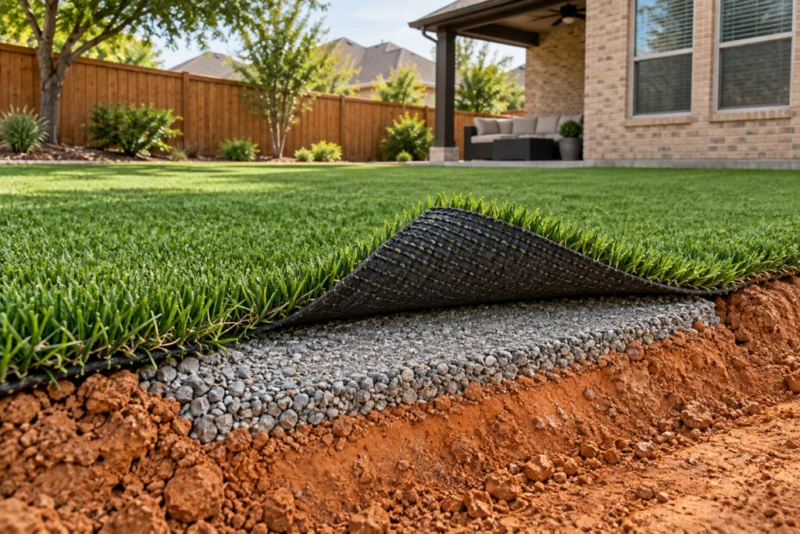
For artificial turf, check the base and water outlet; a backing that lets water through doesn't drain the whole yard by itself. For paving, check which way water flows and how the surface meets buildings. For sod, level-looking ground still needs suitable growing conditions.
Raised beds and borders can change where water goes. Include them in the plan instead of stopping the drainage discussion at the patio edge.
Choose the treatment after the diagnosis
Compare French drains, surface drains and grading by the problem each addresses. A project may need more than one approach, but complexity isn’t a substitute for a clear diagnosis.
The drainage-outlet guide includes official city resources. Don’t plan discharge onto a neighbor’s property or a public connection without checking what is allowed.
Keep drainage visible in the estimate
- Existing concern and intended outcome.
- Proposed collection and outlet route.
- Changes to grades and other surfaces.
- Utility locating and irrigation coordination.
- Restoration and maintenance access.
Texas 811 is relevant before excavation, with private systems identified separately. Have buried work recorded before the new finish covers it. If sod is included, irrigation is required by Plano Landscaping’s installation policy.
Check approvals for your project
Confirm the outlet, easements and any grading or public-system connection before excavation.
Before-surfacing questions
Will new sod absorb the problem?
Don’t rely on a surface change to correct an unidentified water source or unsuitable grades.
Does permeable turf eliminate the need for an outlet?
The complete site must manage water; product permeability alone doesn’t answer the outlet question.
Can drainage be added afterward?
Possibly, but it may require disturbing the new surface. Assess the issue before installation where possible.
Utility and technical references
Texas 811 utility information supports excavation planning. Allan Block water-management guidance illustrates why a constructed feature’s drainage and broader site runoff must be considered separately.
Know someone planning a yard project?