Know someone planning a yard project?
START WITH THE DECISION
Choose for your next use of the yard
If all you want is an open lawn, your conversation may be different from a homeowner planning a room addition. Tell the estimator about serious future plans, even if you won't build them this year. The cheapest way to get grass on the surface isn't necessarily the right preparation for something that needs a foundation.
There isn't a universal winner. Partial removal may reduce demolition and hauling, while full removal eliminates the retained shell as a future obstacle. Neither phrase tells you whether the fill is suitable for a planned structure. That needs its own evaluation.
Before finalizing the scope, compare pool removal and property value and infill compaction testing and engineering reports.
What actually comes out?
These terms usually describe how much of the pool shell is removed. They don't automatically include the deck, attached spa, equipment pad, fencing or every buried pipe. Get those boundaries written down.
FULL REMOVAL
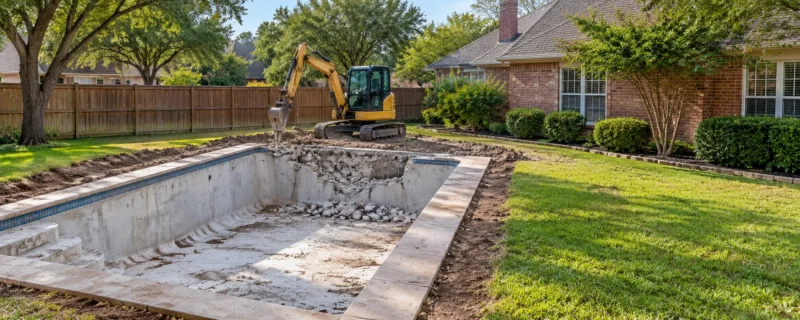
The shell comes out

AI-generated illustration, not a documented customer project.
The entire shell is removed and the excavation is backfilled under the agreed plan. Ask explicitly whether the price includes the surrounding deck and equipment removal, or only the pool itself.
What you gain: the old shell is no longer buried in the footprint. That removes one constraint, but the ground still needs to meet the requirements of its next use.
PARTIAL REMOVAL
Some shell stays below ground

AI-generated illustration, not a documented customer project.
The upper portion is removed and some lower shell remains. The retained portion needs to be addressed under the approved scope, including drainage. Ask for an explanation of exactly what stays and how it will be documented.
What to understand: you’re keeping an underground feature. Future excavation, planting or construction may need to account for it.
Both images show the stage before final backfill. The partial-removal illustration includes demolition debris and visible drainage openings; it doesn’t show that the debris can remain as fill. Actual removal depths, openings, material handling and backfill must follow the approved project requirements.
“Fill-in” is especially vague. Before accepting a quote with that label, ask: Which removal method does this include, and what will still be underground?
Full vs. partial: compare more than the price
On a small screen, swipe across the table. These are planning comparisons, not a determination of what your property permits.
| Compare | Full removal | Partial removal |
|---|---|---|
| Pool shell | Entire shell removed. Define the limits of related demolition. | A portion remains. Identify its location and the required treatment. |
| Demolition & hauling | Typically more shell material to remove and transport. | May involve less removal and hauling; verify the actual scope. |
| Backfill | Specify materials, placement and verification for the planned use. | The same questions apply, with retained shell also accounted for. |
| Drainage | Plan the finished grade and water movement through the site. | Address drainage through retained shell as well as the finished yard. |
| Future projects | No retained shell, but construction still needs ground and foundation review. | Retained material may limit or complicate future work; investigate before choosing. |
| Permits & inspections | Confirm local requirements for this specific project. | Do not assume a permit exemption because less shell comes out. |
| Finished surface | Lawn, paving and planting preparation are separate scope decisions. | The same applies; rough fill is not a finished landscape. |
| Records | Keep scope, removal photos, inspection closeout and any soil reports. | Keep those records plus clear documentation of what remains. |
A useful comparison is two prices for the same end condition. A full-removal quote ending at rough grade and a partial-removal quote including new sod aren’t directly comparable.
WORK BACKWARD FROM YOUR GOAL
What do you want in the former pool area?
 AN OPEN LAWN
Focus on grade, soil and care
Ask whether the proposed method is suitable for landscape use, then define the soil preparation, sprinkler adjustments and lawn installation. Don't stop at “we'll fill it.” Who leaves it ready for grass?
Plan sod installation →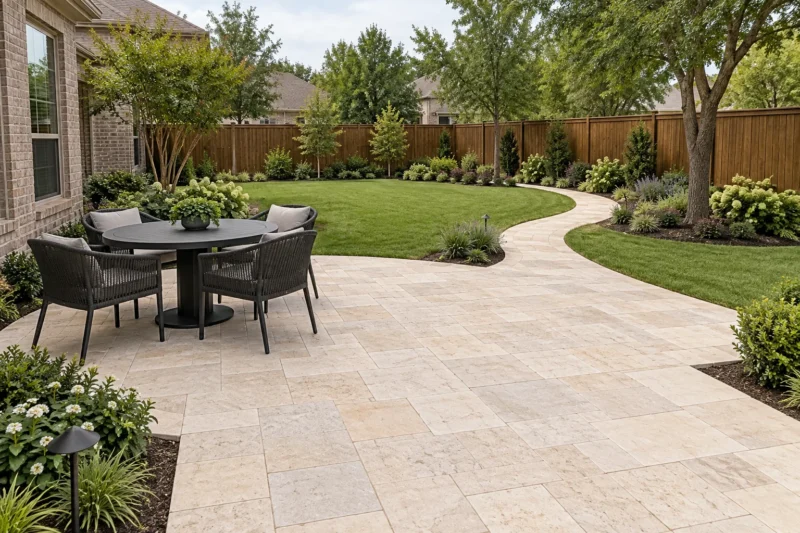 A PATIO OR WALKWAY
Bring the paving plan into the discussion
A level-looking yard isn’t evidence that it’s ready for paving. Have the paving contractor assess the removal history and preparation needed for the chosen surface before the removal work is settled.
Explore patios & walkways →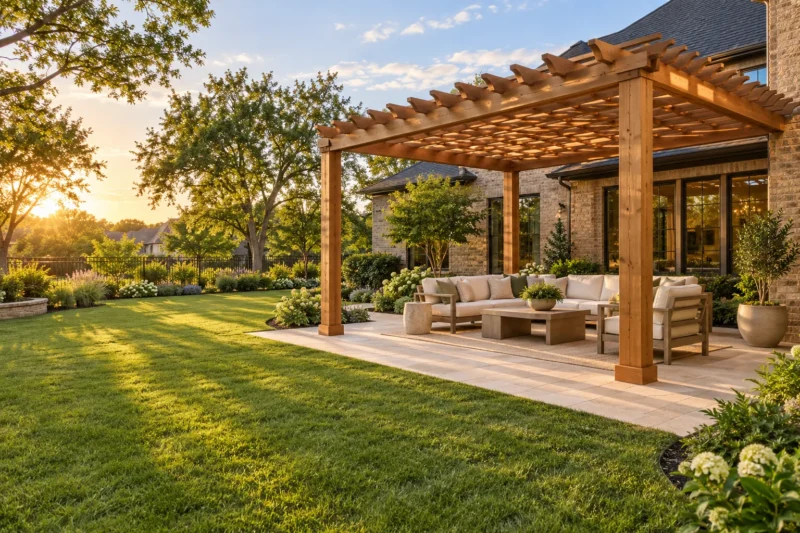 A PERGOLA OR FUTURE ADDITION
Ask about support before choosing a method
Footings and foundations need project-specific review. Show the intended location to the appropriate design professional and city before assuming either removal option supports it.
Plan outdoor living → YOU HAVEN’T DECIDED
Name the possibilities that matter
You don't need a finished design. “Lawn now, possibly a covered patio later” gives the estimator a much more useful starting point than “just make it usable.” Ask which decisions would be expensive to revisit.
See ideas for the space →Images illustrate possible future uses, not completed pool-removal projects or confirmation that a particular site supports them.
Full removal is not a blanket “buildable lot” certificate
Plan the next project separately from the demolition. Before choosing a removal method, ask the appropriate local design professional and city what preparation, records and approvals your proposed patio, footings or addition will require. Have the fill material, placement and verification requirements included in the approved project scope.
The work below the surface deserves its own conversation
Backfill: ask for more than “clean dirt”
Ask what material will be used, how it will be placed and who determines whether it meets the planned use. If testing or professional observation is part of the project, get the responsible party and deliverables in the estimate. Avoid relying on a blanket compaction percentage copied from another city's website.
Also distinguish the fill from the soil at the surface. A lawn needs a suitable growing layer; a patio needs preparation for its paving system. Those are different finishes, even when the yard looks level in a photograph.
Drainage: the old pool and the whole yard both matter
Talk through water entering from the roof, existing paving and the rest of the property. Ask where it will go after restoration. Treating the retained shell and planning surface drainage are related but separate questions; one doesn’t replace the other.
If water already collects around the pool, include a yard drainage assessment in the planning conversation. Putting artificial turf over the area doesn’t remove the need to resolve the ground and outlet conditions.
Utilities: don't assume every private line will be marked
Identify pool power, gas where present, irrigation and other private lines before excavation. Texas811 explains that privately owned facilities may require separate locating. Establish who coordinates public utility locating, private locating and the appropriate disconnections.
Source: Texas811: utility locating questions
For example, if a sprinkler line crosses the equipment access route, ask whether protection or repair is included. It’s easier to settle responsibility before machinery arrives.
FOR PLANO HOMEOWNERS
Does pool removal need a permit in Plano?
Yes—Plano publishes a permit process for pool demolition and backfilling. Its handout lists a pre-demolition inspection covering plumbing and electrical disconnections and bottom drainage, followed by a final backfill inspection. It says the bottom must be broken up or have drainage holes.
The handout lists no drawing submittal, but it’s informational and dated 2010. Confirm current requirements for your address and scope with Building Inspections before scheduling work. It doesn’t show that every later patio or building is approved.
Read Plano’s Pool Demolition Permit PDF ↗Official source: City of Plano Building Inspections. For a property outside Plano, use that city's requirements; don't transfer Plano's process to another jurisdiction.
Check approvals for your project
Full or partial removal, utility disconnections and backfill inspections should be confirmed for the property. Plano Landscaping can handle the permit paperwork.
Partial removal doesn’t automatically avoid permits. Confirm that the proposed removal method, remaining shell and backfill meet the city’s requirements before choosing between quotes.
Put these eight items beside every estimate
For published DFW price examples and a scope checklist, read our Plano pool removal & demolition cost guide.
When two prices are far apart, the most useful question is usually “What is included in each?” Send the same outline to each estimator so you can see where the scope differs.
- Removal boundaries. Shell, deck, spa, equipment and utilities: name what comes out and what stays.
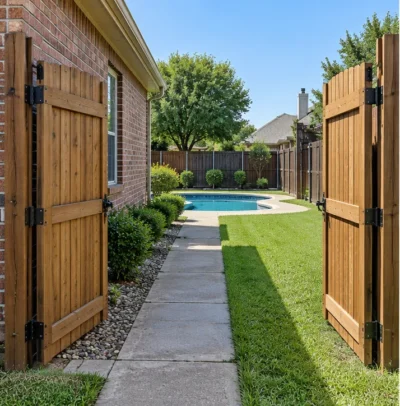
- Access and protection. Identify the machinery route, gate or fence changes, surfaces to protect and access repairs.
- Disposal. Clarify haul-off responsibilities and how unexpected material is handled. Don’t assume “demolition” means all debris leaves.
- Permits and inspections. Name who applies, schedules and supplies the closeout records.
- Fill and verification. Describe material, placement requirements and any testing or professional review included.
- Water and final elevations. Identify the drainage work and finished grade included, with exclusions written down.
- Landscape finish. Is this rough fill, lawn-ready soil, installed sod or another finish? Include irrigation changes if needed.
- Changes and handover. Explain how additional work is approved, what documentation is delivered and what any warranty actually covers.
Why we aren't giving you a universal price here
Pool size is only part of the scope. Access, removal boundaries, hauling, fill, restoration and professional review can change the job. A national price range can sound precise while leaving those items unresolved.
Ask for separate prices where a choice is real: keeping a suitable section of deck versus removing it, or restoring a lawn now versus preparing for a settled patio plan. Compare the cost of the finished result you want, not simply the lowest demolition line.
Start with your pool and your next idea
Share your property address, photos of the pool and access route, and what you would like in its place. Those details help make the site visit and estimate more useful.
Request a Pool Removal EstimateCarry the chosen method into the written proposal and the equipment route: compare the complete pool-removal estimate; prepare access and utilities.
PROJECT HANDOVER
Before the Crew Leaves
Walk through the finished area with your contractor, compare it with the agreed scope, and collect the records that explain what was done underground.
Keep the details you won't be able to see later
Once the lawn is down, photographs of a green backyard won't tell the next contractor what happened below it. Keep a simple project folder while the work is in progress.
- The agreed removal scope and approved changes.
- A record of the former pool location and any retained shell.
- Progress photos before the area is covered.
- Permit and inspection records, plus any soil or compaction reports provided.
- Final restoration scope, care instructions and warranty terms.
Finish with three clear answers
Is anything still outstanding? List remaining work, inspection closeout or access repairs and who is handling each item.
When can you use the area? Ask for guidance specific to the installed surface and any restrictions while the next phase is pending.
Who do you contact afterward? Confirm the contact for questions about drainage, the restored surface or the written warranty.
Give this information to a future patio installer or designer before they price work over the area. If you later sell, ask the appropriate real estate professional how to handle the property's removal history and applicable disclosure requirements.
Ready to think about the surface? Our guide to the space after pool removal compares lawn, turf, planting, patios and phased projects.
Questions worth asking before you choose
Is partial pool removal always cheaper?
It may reduce shell demolition and hauling, but compare written estimates for the same completed scope. Access, fill, restoration and other requirements still affect the price. A lower number with more exclusions may not be the lower total.
Can I build over a pool after full removal?
Don’t assume so. Have the planned structure, ground conditions and documentation evaluated and confirm the required approvals. Removing all the shell resolves the retained-concrete issue; it doesn’t by itself establish foundation suitability.
Can broken concrete just be buried in the pool?
Don’t assume that’s allowed or included. Ask what material stays, what leaves and what the approving authority permits for the planned use. The partial-demolition image shows debris during the work, not approval to use it as final backfill.
How long does removal take?
Ask for a schedule tied to access, demolition scope, hauling, inspections, weather and restoration. Separate time with machinery on site from the date the entire yard is ready for use. A universal day count would hide those differences.
Does waiting a few months make the fill ready for a patio?
Elapsed time alone isn’t a verification method. Ask the patio installer what preparation and records are needed for the proposed surface. See our patio and walkway service when coordinating the next phase.
Will the yard need new sprinklers or drainage?
It depends on the existing layout and planned finish. Ask whether irrigation lines need repair or rerouting and how runoff will be managed. Plan irrigation and drainage before installing the final lawn or paving.
Which method should I request an estimate for?
Describe your next use first, including any future structure. Ask which options can meet that plan and what further review is needed. If both are feasible, request clearly separated scopes so the cost difference is understandable.
Sources & scope of this guide
The official sources below support the Plano permit and utility-location guidance indicated in the text. The comparison and estimate questions are editorial planning guidance. Plano's demolition handout doesn’t provide a complete fill specification or approve future construction; confirm the requirements for your address and proposed use with the city and appropriate project professionals.
- City of Plano: Swimming Pool Demo / Back Filling Permit Requirements
- Texas811: utility locating questions
Reviewed October 3, 2026. This is planning guidance. Illustrations explain concepts and don’t provide construction specifications.
Explore the Knowledge Hub →Know someone planning a yard project?