
Know someone planning a yard project?
Start with how the bed will be used
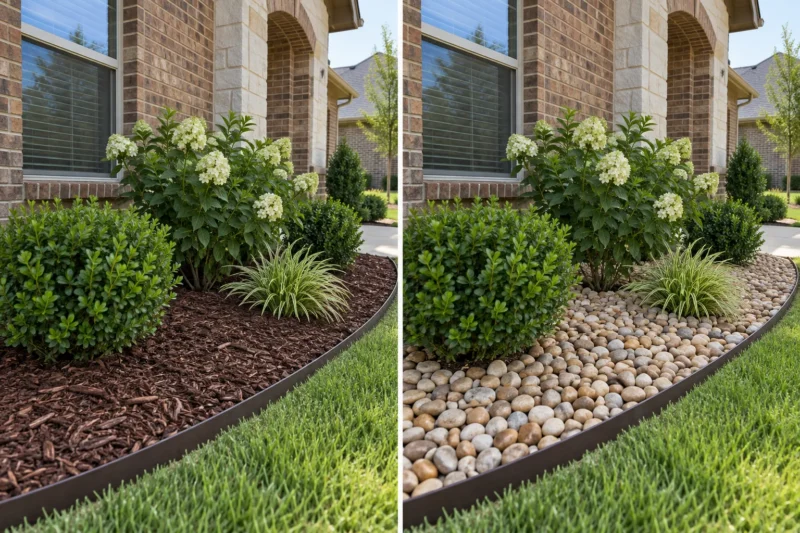
For a bed that changes often, our starting point is organic mulch. For a more permanent decorative area, compare rock. Then look at the planting, sun, leaf litter and access before choosing.
Imagine two beds: one holds seasonal flowers that are replaced regularly; the other is a narrow decorative strip with no foot traffic. They don’t need the same surface just because they sit beside the same house.
Compare the work, not just the look
| Decision | Organic mulch | Decorative rock |
|---|---|---|
| Changing plants | Discuss how mulch will be moved aside and replenished. | Allow for moving stone and any underlying material. |
| Appearance | Soft, organic texture; product color varies. | Size, shape and color vary substantially by product. |
| Routine care | Plan for decomposition, displacement and top-ups. | Plan for leaf removal, weeds and displaced pieces. |
| Future redesign | Include existing material handling in the scope. | Allow for removal and hauling if the design changes. |
| Choosing a sample | Confirm the exact mulch and current condition. | Inspect the current batch and particle sizes. |
USU Extension’s mulch guidance explains that organic mulches decompose and that mineral mulches have different effects and maintenance needs. “Permanent material” should not be read as “no maintenance.”
Keep the planting plan in the decision
Tell the installer which plants are staying and which will change. Ask how the surface will be kept clear of trunks, stems, irrigation equipment and drains. Don’t bury an existing bed deeper simply to make its color uniform.
If you want to reduce watering, review the plants and irrigation as well as the surface. Switching to stone alone doesn’t establish an appropriate watering schedule.
Think through a normal cleanup day
If trees drop leaves over the bed, ask how those leaves will be removed without scattering the surface. If children or pets cross the edge, discuss containment and access. If you use a mower beside it, consider where displaced material might end up.
For example, small loose pieces beside a heavily used gate may create a recurring cleanup job. A defined route through the area could be more useful than changing the color of the rock.
What the comparison quote should show
- Exact material and sample approval.
- Existing material removal or reuse.
- Area, depth and quantity basis.
- Edging and finished levels.
- Plant and irrigation adjustments.
- Delivery access, installation and cleanup.
Compare edging options and use the complete materials guide and supplier directory to prepare your shortlist.
Bring the materials into one project plan.
Send your city, photos, rough dimensions and the materials you like. We’ll discuss the site, preparation and installed work before you order.
Request a Project EstimateCommon questions
Which costs less?
Compare a written installed scope. Material, depth, removal, edging and access can change the answer; a bag price isn’t a project price.
Will rock stop weeds?
Don’t plan on a weed-free bed. Discuss ongoing weed and debris management before choosing the surface.
Does every bed need landscape fabric?
No blanket rule fits every installation. Ask why it’s specified, how it affects planting changes and how it will be maintained.
Can I mix mulch and rock?
Yes, as a design option to discuss. Give each area a purpose and plan a clear edge so the materials stay separated.
Sources and scope
Reviewed October 7, 2026. USU Extension: Water-Wise Landscaping—Mulch supports the material distinction. The scenarios and quotation checklist are our planning guidance, not claims about a completed project.
Know someone planning a yard project?


