Know someone planning a yard project?
Read the bed before clearing it
Photograph the bed in the morning and afternoon. Note plants that thrive, bare spots, crowded areas and where water collects. If a plant repeatedly fails in the same place, replacing it with an identical plant may repeat the problem.
Mark irrigation heads, lighting and access points. Decide which established plants deserve to stay before treating the whole bed as demolition. A mature plant can be difficult to replace in scale and character.
Choose the level of refresh
| Approach | Useful when | What to include |
|---|---|---|
| Selective refresh | The structure works but a few areas need help. | Targeted removal, spacing and irrigation adjustments. |
| Border and planting reset | The shape or edge is awkward. | New bed line, material, plants and finished levels. |
| Complete redesign | The bed no longer fits the site or use. | Sun and soil assessment, removal, watering and access. |
You can phase decorative choices, but resolve the bed shape and buried work before finishing the edge. Moving a completed stone border to fix access is avoidable rework.
Plan for mature size, not nursery size

Texas A&M’s Earth-Kind landscape resources provide a locally relevant foundation for plant selection and water-conscious design. Evaluate sun exposure, growth habit and maintenance needs together.
Keep access to meters, hose connections, equipment and windows. A shrub that fits on installation day may later obstruct those features. Ask how the planting will look as it fills in and what regular pruning would be needed.
Treat the refresh as a connected planting, border and watering plan: plan the full front-yard refresh; compare mulch and rock.
Coordinate the edge with water movement
A raised stone edge can alter the way surface water moves. Tell the estimator about wet areas and runoff from downspouts. A decorative border isn’t automatically a retaining wall or drainage solution.
Review irrigation after the new layout is chosen. Heads that watered an old bed may miss the new root areas or spray the border.
Compare drip and spray irrigation for beds and understand edging versus retaining walls.
Choose an edge you can live with
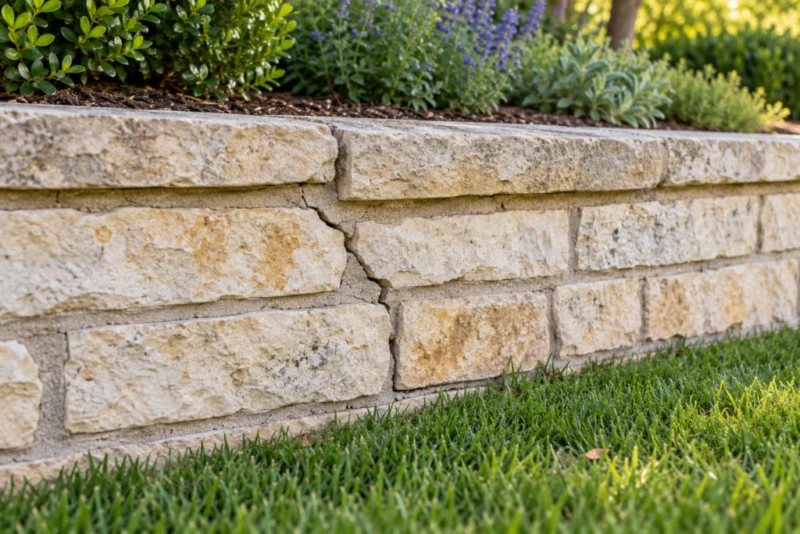
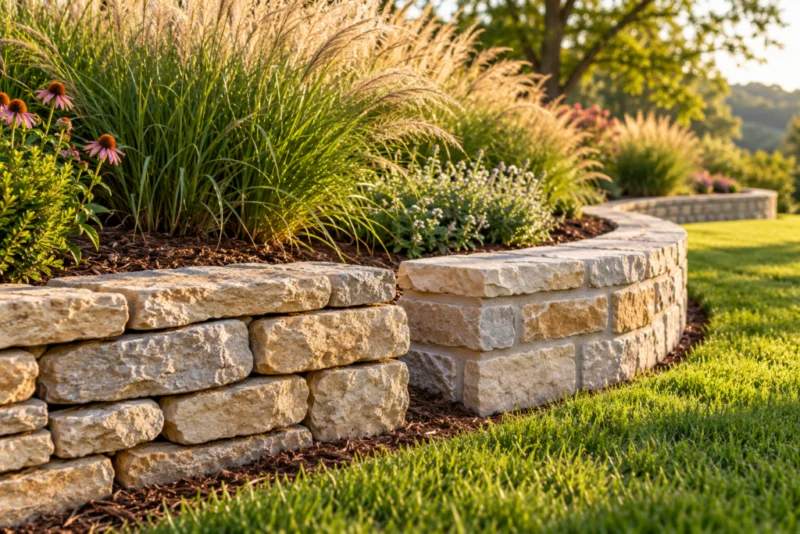
Austin stone is an option offered by Plano Landscaping, including two- and three-layer designs where suitable. Compare Benda Board and stone for appearance, shape and scope. The number of layers alone doesn’t determine whether the edge can hold back soil.
Ask the estimate to separate removal, preparation, border material, plants and irrigation changes. Include cleanup and any lawn restoration beside the bed.
Find Your City’s Stone Borders & Edging Permit Resources
A decorative border and a wall retaining soil are different scopes. Describe the height, number of layers, retained soil and location; don’t assume a small-looking wall is exempt.
What to ask about this project
Ask whether this is treated as landscape edging or a retaining wall, whether drawings are required, and whether drainage, easements or protected-tree rules affect the layout.
Find your city below. Find official resources for Plano and the DFW / North Texas communities we serve. Each city can have different rules, so check the ones that apply to your address and project.
Neighborhoods and communities
These neighborhoods use their city's resources. Check which city has authority over your property.
Confirm the address, scope and fees
Check which authority covers your property; the mailing city alone may not tell you. Dallas neighborhoods link to Dallas resources. Las Colinas and Valley Ranch link to Irving. Check boundary properties, Heartland and Hebron carefully. For Hebron, use the county-listed town contact to confirm the permitting authority. Ask who handles applications, what the current fees are, and which plans and inspections you need. HOA approval is separate from city approval.
Official resource directory maintained October 4, 2026. General links show you where to ask about permits. They don't confirm whether your work needs one. Check the current rules for your project before work begins.
Refresh questions
Can we keep some plants?
Yes—identify them before removal and assess whether the revised layout still suits them.
Will a taller border solve a wet bed?
Not necessarily, and it may change water movement. Diagnose drainage first.
Is a complete redesign always necessary?
No. Selective work can be appropriate when the existing shape, planting and watering mostly work.
Planning reference
Texas A&M Earth-Kind supports climate-appropriate planning. Plant selection remains site-specific; this guide doesn’t promise every plant will suit every Plano bed.
Know someone planning a yard project?