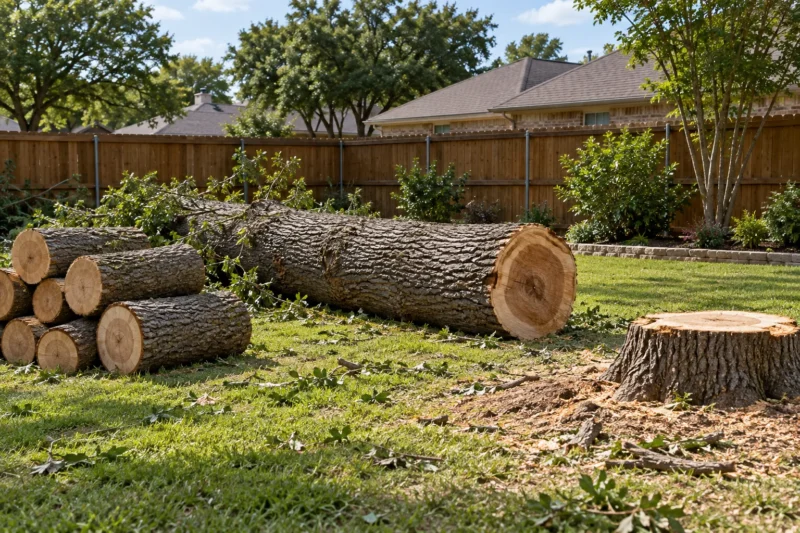
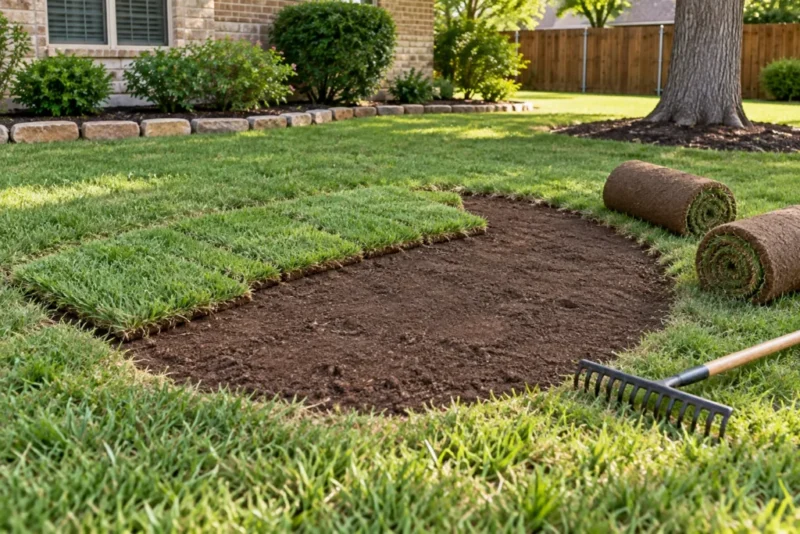
Know someone planning a yard project?
Explain why removal is being considered
Tell the estimator whether the concern is damage, decline, clearance or a new landscape plan. Show changes you have noticed and any earlier assessments. A photograph alone can’t show whether a tree is structurally sound or whether removal is necessary.
If you're unsure about the tree's condition, ask for a qualified assessment. A sales visit doesn't automatically include a formal arborist risk assessment. Size alone doesn't prove a tree is dangerous.
Separate the work into clear parts
| Scope | What to ask |
|---|---|
| Tree removal | Which tree and which portions are included? |
| Debris | Is wood removed, chipped or left in an agreed location? |
| Stump | Is grinding included, optional or excluded? |
| Access | What route and protection are planned? |
| Restoration | Who handles chips, soil, irrigation and the new surface? |
Mark the tree clearly when several are nearby. A written description of the work with photos avoids confusion about which stems or neighboring plants should remain.
Show the constraints early
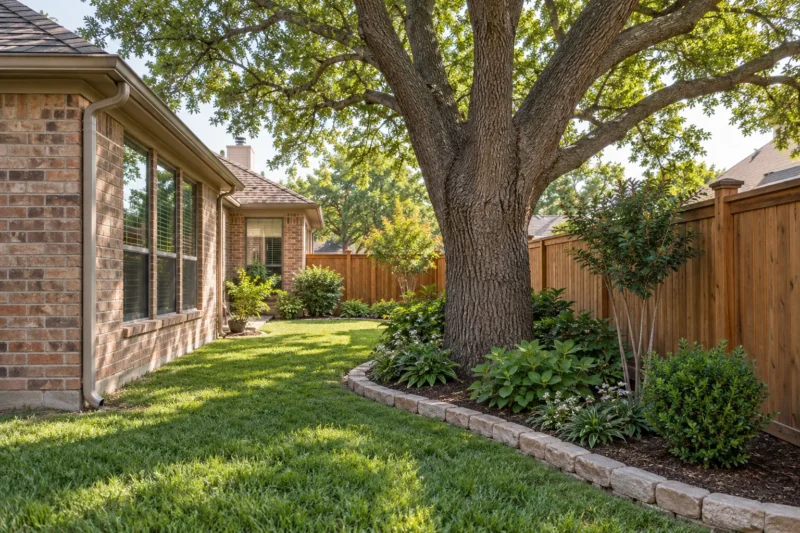
- Buildings, fences and overhead utilities.
- Gate openings and machine access.
- Buried irrigation, lighting and other private lines.
- Plants and lawn you want protected.
- Where equipment can be staged.
Don’t approach or attempt to cut limbs near power lines. Tell the contractor and relevant utility about the situation so responsibility and safe coordination can be established.
Decide what comes next at ground level
Tree removal doesn’t automatically mean the stump and root system are removed. Grinding reduces the stump within an agreed area and depth; it doesn’t turn the entire root zone into clean planting soil.
For a lawn, discuss chip removal, suitable soil and later settling. For a patio or structure, have the ground support checked separately; stump grinding doesn't establish that it's ready.
See preparing for grass after stump grinding and stump grinding services. New sod requires irrigation under Plano Landscaping’s installation policy.
Resolve permission and logistics before the start date
Use the tree-work city resources to check preservation or removal conditions for the property. HOA rules, city requirements and ownership are separate questions. Don’t assume every private-yard tree can be removed without review.
Texas 811 is relevant when excavation or stump work is involved; identify private systems separately. Ask who obtains necessary approvals and what documentation you’ll receive.
Check approvals for your project
Ask about tree-preservation rules, protected trees and any removal conditions before cutting. Stump work and routine pruning are separate scopes.
Removal questions
Is stump grinding included?
Only if the proposal says so. Ask about grinding, chip handling and restoration separately.
Will removal solve nearby drainage problems?
Not necessarily. Assess the water source, grades and outlet instead of assuming the tree is the cause.
Can I keep the wood?
Agree on the quantity, size and location before work; handling expectations affect the scope.
Assessment references
International Society of Arboriculture homeowner resources explain why tree work should follow an identified objective. Texas 811 supports excavation planning. This checklist isn’t a tree-risk diagnosis.
Know someone planning a yard project?