Know someone planning a yard project?
Price the complete border, not just the stone
Stone edging is usually discussed by length, but the installed cost also depends on height, construction method, shape, access and removal of an existing border. A single row along a straight bed is a different scope from a curved, three-layer tree ring.
Plano Landscaping installs Austin stone borders, including two- and three-layer options where suitable, and Benda Board edging. Bring a photo of the look you want, but also explain what the border needs to do: separate grass from a bed, frame a tree or hold back a change in soil level.
There’s no confirmed company per-foot rate in this guide. Local provider Terra Turf includes Austin stone among its border options, while Brick & Stone Master distinguishes installation, repair and replacement. That distinction is useful when requesting comparable quotes.
Which border are you actually comparing?
| Option | Visual effect | Budget questions |
|---|---|---|
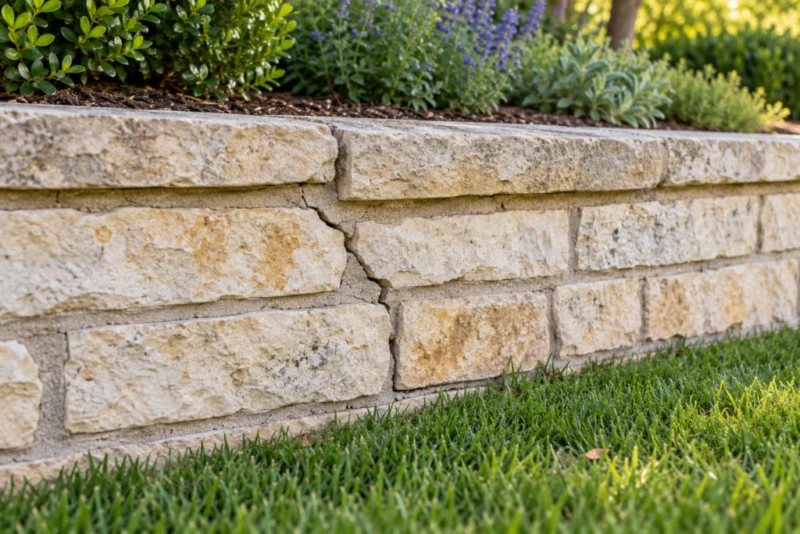
| Single-layer Austin stone | A low, defined edge. | Stone size, bedding/preparation and total length. |
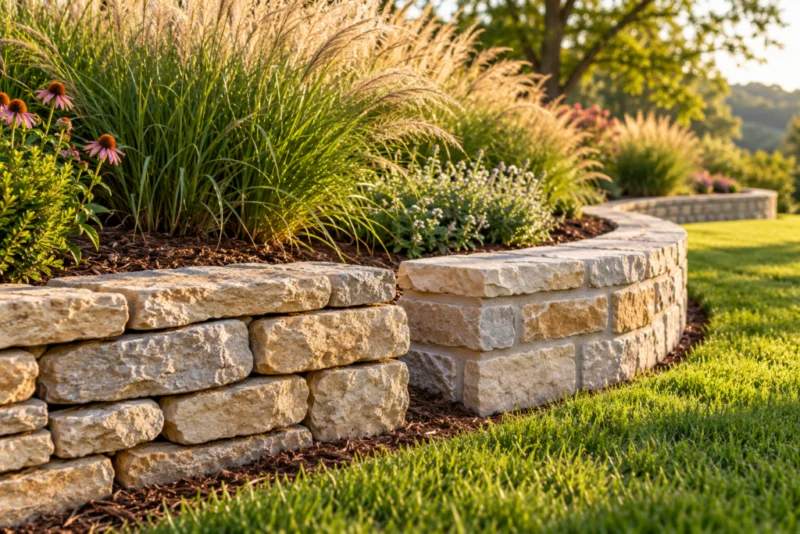
| Two-layer stone border | A stronger outline around the bed. | Finished height, joints and the construction method. |
| Three-layer border or ring | A more prominent raised outline. | Whether retained soil or tree roots change the design. |
| Benda Board | A lower-profile separation following the bed shape. | Board specification, supports, curves and transitions. |
Don’t assume three layers cost exactly three times one layer. Site preparation and setup don’t multiply in that way, while cutting, joints and support details may change. Ask for two versions of the same layout if you want a meaningful price comparison.
For a lower-profile alternative, compare Benda Board and stone edging before choosing the border.
See the height in context before adding another layer

A taller ring may look tidy but should not become a reason to bury the trunk flare or pile soil against the trunk. University of Maryland Extension explains that mulch should stay away from trunks and that wood chips used as mulch should not be incorporated into soil. Tree and shrub mulching guidance.
For an established tree, discuss roots and the existing soil level before choosing the ring diameter or excavating for a border. A photo of a ring is a style reference, not evidence that the same detail suits every tree.
Measure the line the installer will actually build
Sketch each bed separately. Mark curves, corners, openings and where the new border meets a driveway or walkway. A flexible measuring line can help describe a curve; an estimator should verify the final dimensions.
For a circular ring, the circumference is approximately diameter × 3.14. A ring with a 10-foot outside diameter has an outside circumference of about 31.4 feet. Ask which measurement line the quote uses: outside edge, centerline or another defined basis. That example doesn’t determine how close the border should be to a tree.
If a proposal uses an assumed $30 per linear foot for 60 feet, the arithmetic is $1,800. This is a calculation example, not a company price or a DFW average. Confirm what it includes before adding demolition, soil work or other separately priced items.
Small details can change the work more than you expect
| Detail | What to ask |
|---|---|
| Old edging | Is removal and disposal included, including buried pieces? |
| Tight curves and corners | Are cuts and fitting included in the quoted length? |
| Bed levels | Will soil or mulch need to move, and who handles it? |
| Water flow | Will the proposed border obstruct existing drainage? |
| Irrigation | Are heads, drip lines or supply pipes in the work area? |
| Lawn edge | How is disturbed grass restored, if needed? |
Keep the boundary between decorative edging and retaining work clear. If the border must hold back a substantial level change, discuss a retaining wall assessment. The number of stone courses alone doesn’t establish structural suitability.
Water should not become trapped simply because the border looks continuous. Explain where runoff currently travels and ask how the proposed detail accommodates it. A separate drainage assessment may be relevant if the bed or adjacent lawn already stays wet.
Does the whole border need replacing?
A few displaced stones and a long, repeatedly separating border deserve different conversations. Ask what caused the movement, whether the existing materials can be matched and what is included beneath the visible repair.
If the shape no longer suits the bed, rebuilding only the damaged corner may spend money on a layout you intend to change. Conversely, don’t replace a sound border just because a small repair is possible. Compare a defined repair work with a full replacement using the same desired finish.
Photograph the problem before moving stones. Describe whether the issue changes after rain, whether roots are nearby and whether irrigation work has disturbed the area. Those observations help the assessment without pretending to diagnose it.
What should the written border estimate include?
- Material, stone size or board specification, and the agreed appearance.
- Measured length, layout, finished height and number of layers.
- Preparation and construction method—not just “install stone.”
- Removal, disposal, bed adjustments and irrigation responsibilities.
- Transitions to paving, gates and adjoining borders.
- Cleanup, restoration, applicable charges and how changes are approved.
Ask whether mortar or another joint detail is proposed instead of assuming it from the photograph. Keep optional bed-refresh work separate so you can see what the edging alone costs.
For the wider proposal, use our landscaping estimate checklist. Send photos, your address, approximate length and your preferred one-, two- or three-layer appearance when requesting an estimate.
Request a Stonework & Edging EstimateFind Your City’s Stone Borders & Edging Permit Resources
A decorative border and a wall retaining soil are different scopes. Describe the height, number of layers, retained soil and location; don’t assume a small-looking wall is exempt.
What to ask about this project
Ask whether this is treated as landscape edging or a retaining wall, whether drawings are required, and whether drainage, easements or protected-tree rules affect the layout.
Find your city below. Find official resources for Plano and the DFW / North Texas communities we serve. Each city can have different rules, so check the ones that apply to your address and project.
Neighborhoods and communities
These neighborhoods use their city's resources. Check which city has authority over your property.
Confirm the address, scope and fees
Check which authority covers your property; the mailing city alone may not tell you. Dallas neighborhoods link to Dallas resources. Las Colinas and Valley Ranch link to Irving. Check boundary properties, Heartland and Hebron carefully. For Hebron, use the county-listed town contact to confirm the permitting authority. Ask who handles applications, what the current fees are, and which plans and inspections you need. HOA approval is separate from city approval.
Official resource directory maintained October 4, 2026. General links show you where to ask about permits. They don't confirm whether your work needs one. Check the current rules for your project before work begins.
Stone border budgeting questions
Is Austin stone always more expensive than other edging?
Not necessarily for every scope. Compare the actual material, dimensions and preparation rather than ranking products by name alone.
Can I add another layer to my existing border?
Have the existing construction and intended soil levels assessed first. Another layer isn’t automatically suitable.
Is Benda Board the same as a retaining wall?
No. Discuss it as landscape edging for an appropriate application, not as a substitute for a retaining structure.
Does the quote include new plants or sod?
Only if listed. Ask for bed changes and lawn restoration to be identified separately.
Sources and pricing notes
Reviewed October 4, 2026. The local contractor pages above provide service and scope context, not verified invoices or our prices. University of Maryland Extension supports the tree-mulching point. Border comparisons and estimate questions are planning guidance.
Images and arithmetic are illustrative. Exact construction, material availability and price require a defined site-specific scope.
Know someone planning a yard project?