Know someone planning a yard project?
Start with when the wetness appears
A yard may stay wet because water arrives faster than it can leave or soak in, because a low area traps it, or because a leak keeps adding water. More than one issue can be present. A French drain is one possible tool, not a diagnosis.
Write down whether the problem follows rain, follows irrigation or remains during dry weather. Take photos from the same position over time. Include the water’s apparent entry point and the surrounding paving, downspouts and slopes.
If water threatens the house or is near electrical equipment, keep clear and arrange prompt professional assessment. Don’t enter moving water or investigate energized equipment.
For specific site conditions, compare muddy side-yard drainage and standing water near foundations and French drains versus sump pumps and French drain maintenance.
What does the pattern tell you?
| Pattern | Questions to investigate | Useful evidence |
|---|---|---|
| After heavy rain only | Where does runoff enter, and where can it leave? | Photos during and after the event, taken safely. |
| After a particular irrigation zone | Is delivery excessive, uneven or leaking? | Zone number, timing and visible spray. |
| Wet in otherwise dry weather | Is a water source continuing to feed the area? | Dates, weather and irrigation activity. |
| A recurring low patch | Is the finished grade trapping water? | Wide views showing surrounding levels. |
| Wet along new paving or a border | Has the work interrupted a previous route? | Before/after photos and project scope. |
These observations narrow the conversation. They don’t prove where a buried leak is or establish the correct outlet for a drain.
Sometimes the ground cannot accept water quickly
University of Maryland Extension explains that compaction reduces the air spaces that help soil drain and support roots. Traffic on wet soil can make the problem worse.
Not every wet Plano lawn needs the same soil treatment. Mention recent construction, heavy foot traffic and areas that were filled. Compare the wet spot with nearby ground instead of assuming the whole property has the same conditions.
Don't cover a low spot with soil just to hide it. The new ground levels need to work with the house, neighboring ground and a suitable drainage route.
Check irrigation and roof runoff separately

Observe sprinkler operation from a safe position. Water surfacing in one spot, weak spray or wetness between cycles is information to share with an irrigation professional. Avoid changing several controller settings at once and losing the original pattern.
During rain, note downspout discharge and runoff from paved areas. Ask whether an existing drain inlet or outlet is obstructed. Don’t connect roof water to an unknown buried system without confirming its route and suitability.
The EPA’s sprinkler guidance provides a practical check for damaged components, misplaced spray and leaks. It doesn’t replace a drainage assessment.
For wetness associated with the irrigation system, record the zone and timing separately: review sprinkler troubleshooting symptoms.
The outlet matters as much as the inlet
A surface collection system addresses water on top of the ground. A subsurface drain addresses water within the soil. Grading changes the surface route. Some projects combine approaches; others primarily need an irrigation repair.
Our drainage comparison guide explains the differences. Before accepting a proposal, ask where the water will discharge and how that location is approved.
A buried pipe still needs a suitable outlet. Don't send water onto a neighbor's property or assume you can connect it to the street.
Check the water destination before choosing the drain: plan the drainage outlet.
New sod cannot diagnose the old problem
If grass keeps failing in the same wet area, resolve the site conditions before ordering replacement sod. Otherwise the new lawn inherits the same problem.
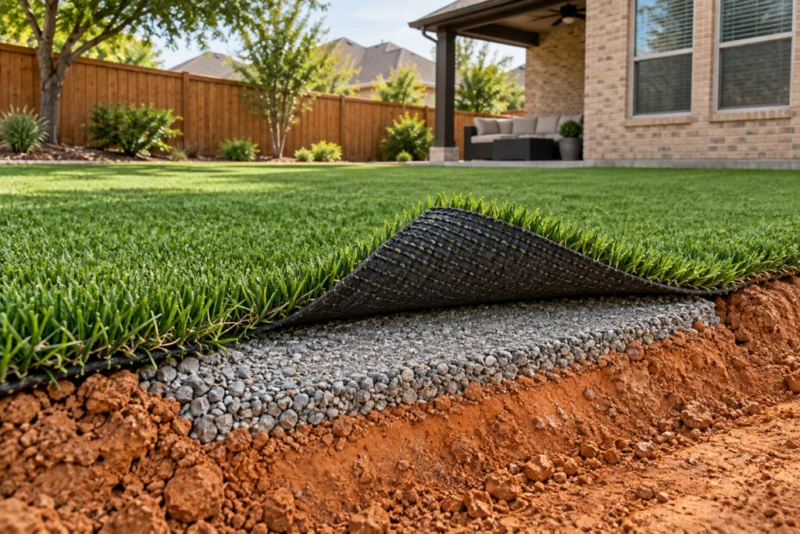
For artificial turf, the drainage question remains. The surface is part of an installation system; it doesn’t automatically remove water from a low yard.
Plan the sequence with drainage before landscaping, then discuss the finish. Keep the restoration work visible in the estimate so you know whether lawn preparation and sod are included.
 Plan the new lawn
 Compare artificial turf
Bring a short history of the wet spot
- When it started and whether the area recently changed.
- Rain and irrigation patterns associated with it.
- Photos showing the whole area and possible water sources.
- Known drains, outlets, buried services and past repairs.
- Your intended use: lawn, patio, planting area or access route.
Ask the proposal to explain the suspected cause, recommended work, outlet, approvals and restoration—not simply list a number of feet of pipe.
Request a Yard Drainage Assessment →Wet-yard questions
Does every wet yard need a French drain?
No. First distinguish surface runoff, subsurface water, poor levels and irrigation faults.
Will new sod dry the area out?
It should not be treated as a drainage repair. Address the underlying conditions first.
Can I send water into the street?
Confirm the approved discharge route with the governing authority before designing a connection.
What if it stays wet without rain?
Record irrigation activity and arrange an assessment of possible continuing water sources.
Sources and limits
Know someone planning a yard project?