Know someone planning a yard project?
An open structure makes moving shade
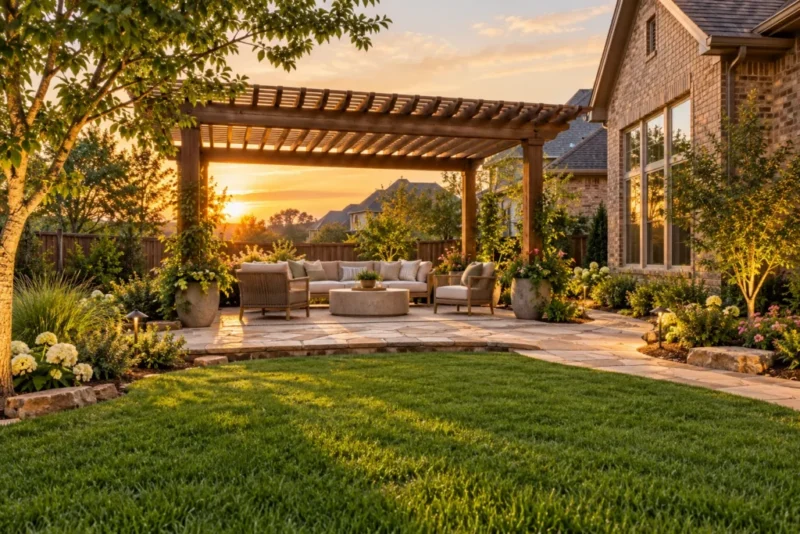
Open rafters cast bands of shade that move as the sun moves. That can be pleasant for some uses and insufficient for others. If you want dependable cover over a dining table during a particular hour, make that an explicit design requirement.
A pergola photo taken at noon doesn’t answer how a west-facing patio feels at 6 p.m. The important comparison is the space in use under the conditions you care about.
Run a simple shade observation
- Photograph the proposed seating area in the morning, midday and late afternoon.
- Record which parts of the table or chairs remain exposed.
- Note shade from the house and existing trees.
- Repeat when seasonal changes could materially affect use.
- Bring the observations to the site visit.
This is a homeowner observation exercise, not a solar-engineering study. It helps the designer understand the problem you’re trying to solve. If a narrow strip of shade never reaches the seating, a larger structure in the same place may not be the best answer.
Compare shade approaches honestly
| Approach | Question to resolve |
|---|---|
| Open rafters | How much direct sun reaches the actual activity area? |
| Additional shade layer | Is it suitable for the structure, wind and maintenance? |
| Different placement | Can moving the seating or structure improve the result? |
| More enclosed cover | Does the project become a different structural and approval scope? |
Before adding a cover, have the structure checked for the extra weight and wind exposure. Ask which shade options are offered and suitable for your pergola.
Shade is only part of comfort
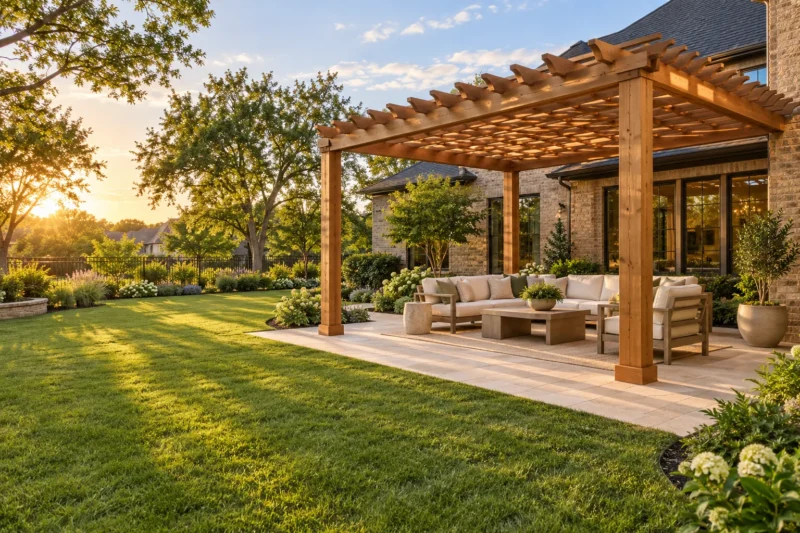
The surface beneath the seating, airflow and nearby walls also affect how the space feels. A shaded spot can still be uncomfortable at some times; no design should be sold as a fixed temperature reduction without evidence.
Plan a shaded route from the house if pets or children use the area. For artificial turf nearby, see the heat guide before assuming the green appearance means a cool surface.
Make the promise specific
Ask what shade performance the proposed layout is intended to achieve, at what times, and over which area. Have the material, spacing, finish and any added shade component identified in the proposal.
If the design can’t provide the outcome within the budget, consider a smaller shaded activity area or a different location. A clear limitation is more useful than a vague assurance.
Coordinate the complete outdoor space
Use the placement and sizing guide before finalizing posts. Compare deck comfort or turf heat if those surfaces are part of the plan.
For approvals and pricing scope, start with the pergola project cost guide.
Check approvals for your project
Describe the structure, attachment, foundations and electrical work when checking approvals. An open pergola and a solid roof are different proposals.
Shade questions
Does a larger pergola always give better usable shade?
Not if the shade misses the seating at the times you use it. Placement and design matter.
Can I add fabric later?
Have the structure and proposed attachment assessed first; don’t assume later additions are harmless.
Is shade the same as rain protection?
No. Treat those as separate requirements.
Reference and limits
Earth-Kind landscape planning is a useful site-planning reference. This guide offers observation and design questions, not a guaranteed shade percentage or cooling claim.
Know someone planning a yard project?