Know someone planning a yard project?
The short answer
This guide covers the installation scope after you decide to replace the lawn. For the earlier decision about shade, irrigation and why grass is failing, start with what to check before replacing patchy grass.
A successful lawn replacement starts before the sod arrives. Overgrown weeds, compacted ground and uneven levels are different problems, and a thin layer of topsoil cannot solve them all. The preparation scope should explain what is being removed, what is being corrected and what condition the ground must reach before installation.
- Assess sunlight, irrigation, drainage and access.
- Remove unwanted vegetation and debris using a suitable control plan.
- Locate utilities and protect roots, irrigation and existing structures.
- Correct soil limitations and grades when the ground is workable.
- Firm, smooth and check levels before delivery.
- Install promptly, water appropriately and document the handover.
Find out why the old lawn failed
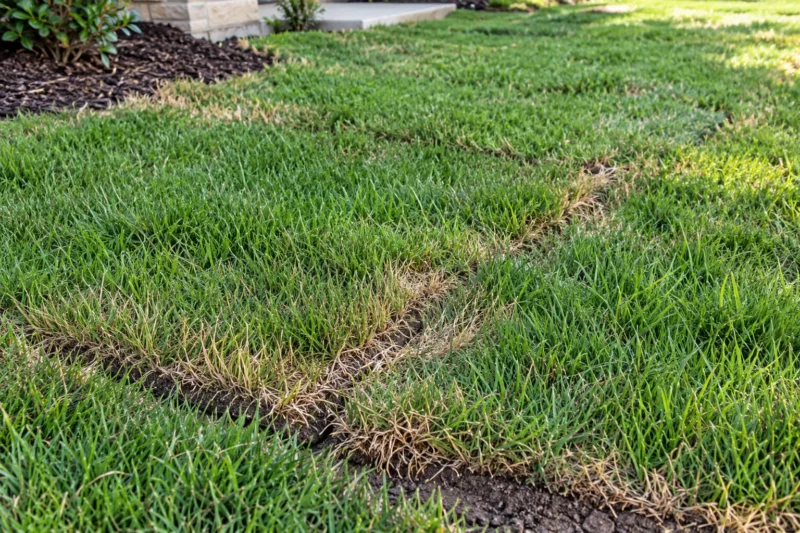
If grass disappeared beneath dense tree cover, replacing it with the same sun-demanding variety repeats the problem. If water stands in a side yard, new sod will not create an outlet. Walk the property after rain and during an irrigation cycle. Record shade, traffic routes, buried debris and wet spots before selecting the grass.
When the existing lawn includes Bermuda, plan grass conversion and pretreatment before removal and delivery.
Map the lawn before clearing it
Take overview photos while the existing vegetation still shows where the problems are. Mark bare paths, dense shade, low areas and places where weeds repeatedly outcompete the grass. Once everything is stripped, those clues are harder to recover. A simple sketch can also identify gates, irrigation controls and the route for equipment.
Separate the desired lawn area from beds or spaces that are unlikely to support turf. Measure the actual replacement area, not the entire property. Use the lawn calculator as a planning aid, then have the installer confirm quantities, access and the amount of waste or trimming allowed for the layout.
Removal is more than mowing short
Mowing helps expose the site but does not remove the existing root mat, persistent weeds or hidden rubble. A proposal should identify the removal method, disposal, and whether repeat weed control may be needed. Where a herbicide is proposed, the applicator must follow the product’s site, grass and planting restrictions. Do not schedule sod from a generic waiting period found online.
Distinguish light preparation from a site correction
A quote for normal sod preparation is not automatically a quote for major earthwork. Light grading and smoothing can address small surface irregularities; they cannot be assumed to fix a yard with no drainage route, deeply buried rubble or unstable fill. Ask the contractor to identify those conditions before comparing the sod price.
Where compost or topsoil is included, confirm its purpose and placement. Extra imported material changes finished elevations as well as cost. Check that the proposed surface still meets paths and beds properly and does not block drainage or reduce clearances at the house. A photograph of dark new soil is not evidence that the underlying problem has been solved.
Does every lawn need tilling?
No. Tilling is a tool for a diagnosed preparation need, not a universal upgrade. Working wet clay can leave clods and damage soil structure. Excavation can also affect tree roots and shallow private lines. Where compaction or amendments justify cultivation, define the area and method; then allow for settling and final firming. A fluffy seedbed that sinks underfoot is not ready simply because it looks smooth.
| Scope item | Ask for this detail |
|---|---|
| Vegetation removal | Area, method, disposal and persistent-weed plan |
| Soil improvement | Test findings, material, quantity and mixing method |
| Grading | Finished levels, drainage route and transitions |
| Irrigation | Coverage checks, repairs and responsibility |
| Handover | Watering instructions, rooting checks and traffic limits |
Plan the order of work to protect the investment
Complete work that requires heavy access before laying the new lawn whenever practical. Drainage trenches, irrigation repairs, stump work and hauling can damage fresh turf and disturb its prepared surface. If another contractor must return, agree on access protection and responsibility for restoration before installation.
Utility locating and protection of private irrigation or other buried lines belong in that coordination. Tree roots need their own care: avoid treating every root as debris to be removed. Discuss difficult areas with the appropriate professional and adapt the lawn boundary where necessary. The most useful preparation plan is specific about the work sequence and the conditions that would change it.

Black clay does not have one universal amendment recipe
A soil test helps identify nutrient and pH needs. It does not replace a physical drainage assessment. Ask why any imported soil or compost is proposed and how it will integrate with the existing ground. Avoid assuming that a little sand, gypsum or a surface blanket of topsoil will permanently transform clay. The correct material and treatment depend on the actual limitation.
Walk the site before the sod arrives
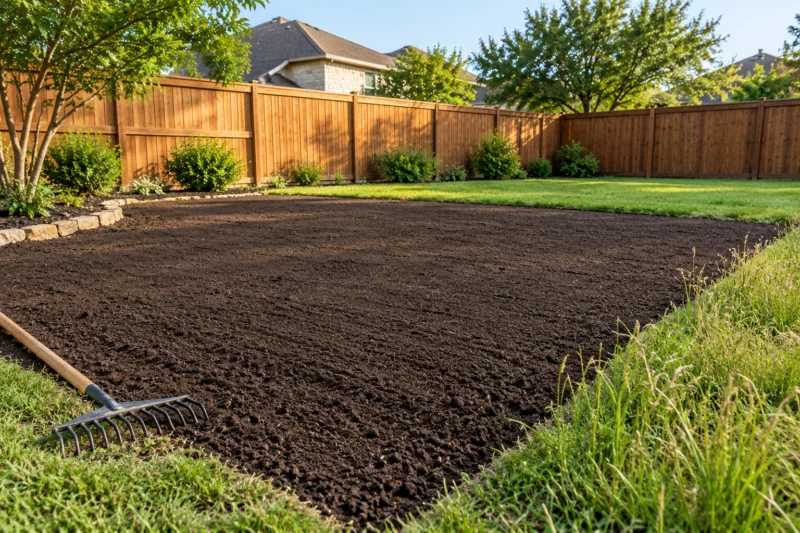
Ask to review the prepared surface while it is still visible. Look at transitions to paving, obvious depressions, debris, firmness and the intended direction of runoff. Confirm that irrigation covers the final layout. This is the moment to resolve a question about levels, before the new grass hides the surface.
At handover, keep the grass variety, installation date and care instructions together. Follow the sod aftercare guide and document any missed coverage immediately. Preparation and aftercare are connected: even a well-prepared site needs moisture checks and protection while roots attach.
What “sod-ready” should look like
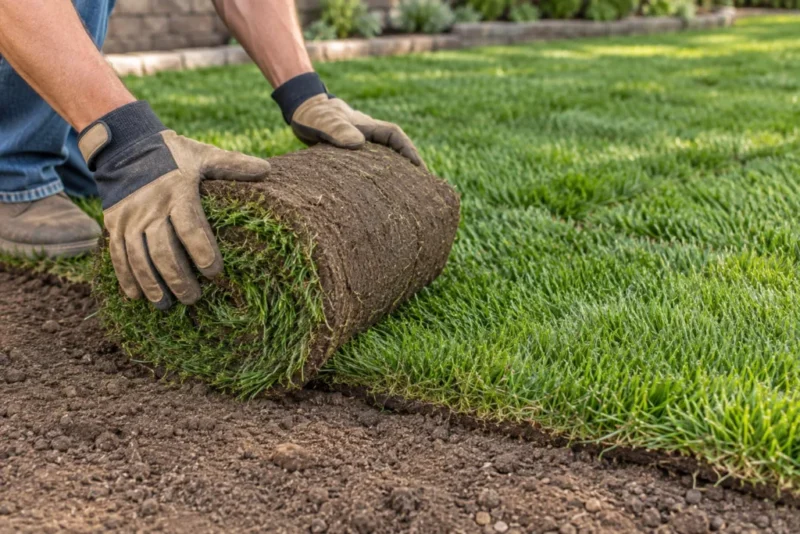
The surface should be free of major debris, properly firmed and graded to the intended elevations, with room for the thickness of the sod at paving edges. Do not raise soil against siding or cover drainage openings. Irrigation should be functional before delivery, and the contractor should identify any remaining work that could damage the new turf.
For complete sod preparation and installation in Plano, compare the included preparation with extras such as substantial grading, drainage or heavy debris removal. A useful quote makes those differences visible before a crew arrives.
Common questions
Can sod go directly over weeds?
Unwanted vegetation and the underlying cause of failure need a suitable preparation plan. Simply covering an overgrown lawn does not create a reliable new growing surface.
Is more topsoil always better?
No. The material and quantity should address an identified need and fit the finished levels. More soil can bury clearances or redirect water if elevations are not considered.
Does tilling solve poor drainage?
Not by itself. Drainage depends on the water source, surface and subsurface conditions, and a workable destination. Tilling does not create an outlet.
When should I book irrigation repairs?
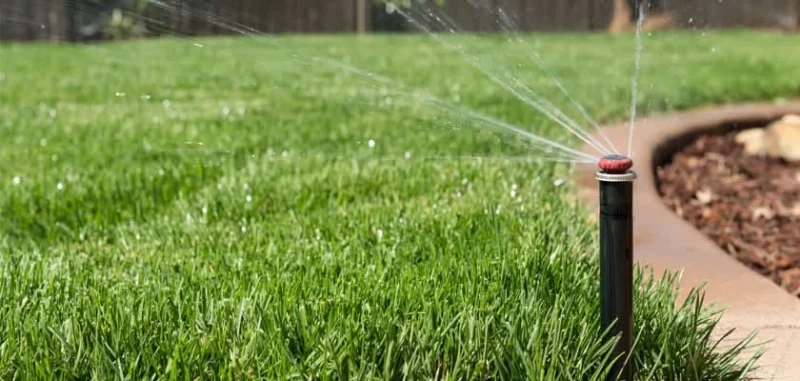
Before delivery. The new layout needs functioning coverage when the sod is installed, and repairs are easier before fresh turf covers the work area.
Sources and further reading
These references support the technical principles in this guide. Planning examples and checklists are editorial guidance, not a site-specific design.
Texas A&M: preparing turf soil · Texas A&M: turfgrass establishment
Before you request a lawn-preparation quote
Bring wide photos, the existing grass type if known, approximate lawn area, drainage concerns and irrigation details. Ask for pretreatment, removal, soil preparation and installation to appear in sequence in the written scope.
What should I gather before requesting a quote?
Use the Lawn Calculator for an initial area estimate. Confirm actual measurements, access, disposal and any extra grading at the site review.
Know someone planning a yard project?