The short answer
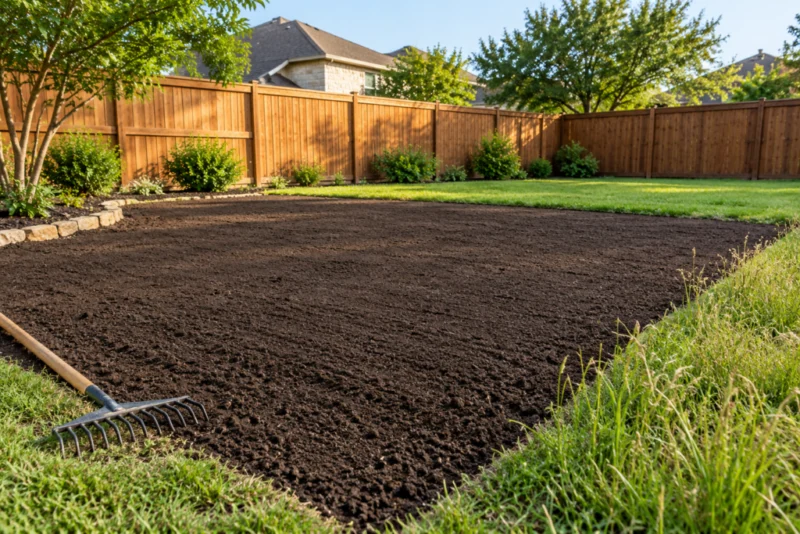
Changing from Bermuda to Zoysia or St. Augustine is a lawn-renovation project, not simply a new layer of grass. First confirm that the replacement fits the sunlight, irrigation and use of the yard. Then plan treatment of unwanted grass where needed, removal, soil preparation and installation. The goal is to reduce regrowth risk while giving the new lawn suitable conditions to establish.
Start with the reason Bermuda is being replaced
A lawn that has thinned under a growing tree canopy may need a different approach from a sunny lawn whose owner wants a different texture. Repeatedly replacing grass without checking the cause can reproduce the same result. Look at the worn gate route, the damp strip beside the fence and the area beside hot paving separately. One grass choice may not suit every part of the property.
Before choosing a replacement, use our North Texas grass-selection guide. This conversion guide covers what happens after that shortlist: managing the old grass, coordinating the work and knowing what the quote includes. It is not a second general comparison of grass varieties.
Why Bermuda can return after removal
Bermuda spreads through above-ground runners and underground stems. Removing the visible green layer does not demonstrate that every surviving piece has been removed. Edges beside beds, adjoining lawn and fence lines also deserve attention because growth can enter the converted area later. A clean-looking surface on removal day is a useful checkpoint, but not proof of eradication.
This is why the order of work matters. Where treatment is needed, completing it before removal gives the selected treatment time to act while the existing grass is still present. Digging first and addressing persistent grass later can make the preparation less orderly. Product choice, application conditions and any replanting interval must follow the actual label and the responsible applicator’s instructions. This article does not prescribe a chemical or rate.

Our conversion process: assess, pretreat, remove, prepare, install
- Assess & pretreatIdentify persistent grass; treat where needed.
- Remove old grassReassess the response before clearing.
- Prepare soilResolve the agreed levels, coverage and site issues.
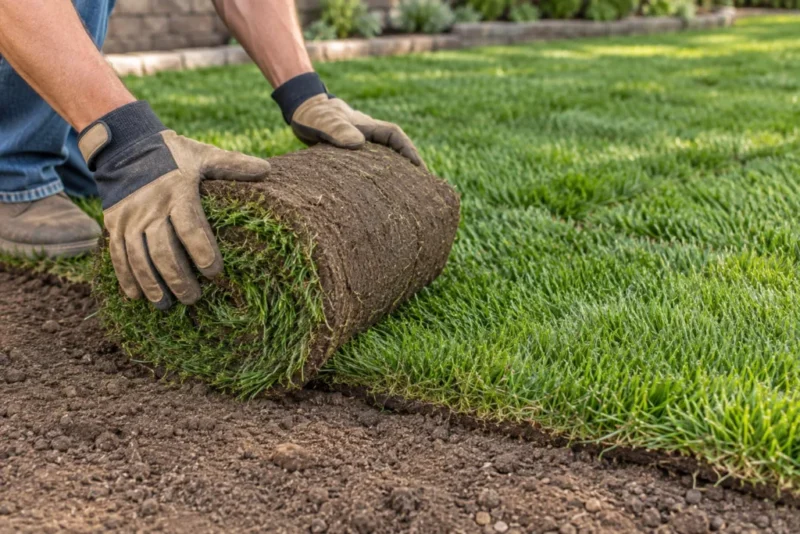
- Install sodLay the chosen grass and hand over its care plan.
Planning sequence; the assessment determines the work.
These four phases summarize the work. Our complete nine-stage sod installation process also makes measurement, edge finishing, cleanup and the aftercare handover visible.
Where needed, treatment of existing grass and persistent weeds is included in our installation price and completed before removal. This is especially important when replacing Bermuda or changing grass types, and may also be recommended when changing cultivars to reduce regrowth of the original grass.
Pretreatment generally occurs 10–14 days before installation. Persistent Bermuda may require additional treatments and a longer preparation period. That is a planning allowance, not a guarantee that the site will be ready on day 14. Confirm the next stage after the response is assessed. Required pretreatment is included in the quote.
Zoysia and St. Augustine still need a suitable site
Considering Zoysia
Specify the cultivar. Compare the actual sunlight, mowing routine and intended wear rather than treating every Zoysia as identical.
Considering St. Augustine
Consider its maintenance and site needs alongside its suitability around some shaded yards. Persistent deep shade is still a constraint.
Changing a Bermuda cultivar
A new cultivar does not make the original grass disappear. Ask whether pretreatment and edge management are warranted.
Do not rely on the replacement grass to outcompete all remaining Bermuda. Nor should a shade-tolerance description be treated as permission to sod a permanently dark, wet corner. A bed, a suitable path or another surface may make more sense there. Decide those boundaries before measurements and pallet quantities are finalized.
What removal and soil preparation should cover
Ask the written scope to identify the area being converted, disposal of the old surface, treatment of persistent grass and the finished-level relationships. Include sprinkler heads, tree roots, utilities, beds and access. Removal depth should follow site conditions and the agreed work; there is no universal depth that proves Bermuda has been eliminated.
A blanket promise to till everything is not a substitute for that scope. Disturbing soil can affect levels, roots and buried components, so discuss whether cultivation is useful and where it should be limited. If the lawn holds water or the ground is unsuitable, settle the correction before delivery. Our sod-preparation scope guide explains the broader handover.
Build a realistic conversion schedule
| Stage | What must be resolved | What can change the date |
|---|---|---|
| Selection | Cultivar, area and daily light pattern | A shaded area needs a different use |
| Pretreatment | Required treatment and reassessment | Persistent Bermuda needs another visit |
| Preparation | Access, drainage, irrigation and levels | Hidden site conditions or wet ground |
| Delivery | Sod supply and a ready site | Weather or an incomplete correction |
| Aftercare | Monitoring and working irrigation | The lawn responds differently across the yard |
Schedule delivery after the preparation is credible. Do not leave fresh sod waiting while an outlet, broken sprinkler zone or disputed boundary is being resolved. Allow the household to plan around restricted access, pets and work areas. Use the seasonal installation guide for the timing question, then confirm the site-specific sequence.

Before arranging delivery, check sprinkler coverage before new sod.
Reduce regrowth risk at the boundaries
Walk adjoining Bermuda, bed edges and the strip beyond the fence as part of the assessment. Clarify which areas are within the quoted work and which are outside your ownership or the contractor’s access. An excluded strip can remain a source of later growth even when the converted area was carefully prepared.
After installation, photograph any grass that appears different before trying to treat it. Identification matters: texture or winter color alone may not settle the species. Some control options suitable before renovation are unsuitable over the replacement lawn, especially while new sod is establishing. Ask for a response that fits the exact grass and stage rather than applying a leftover product.
Compare quotes by the conversion scope
A cheaper price can describe a different job. Compare cultivar, measured area, pretreatment, removal, disposal, site corrections, irrigation work and the care handover separately. Check whether testing, imported material or drainage changes are included, excluded or conditional. Required grass pretreatment is included in our quote; other work should be described specifically.
Keep the original preparation record with the aftercare instructions. Ask how to check attachment and when to report loose pieces, wet areas or changing patches. Our rooting and first-mow guide and aftercare guide help turn installation into a manageable household plan.
Common questions
Can new sod go straight over Bermuda?
Do not treat covering the old lawn as a conversion plan. The existing vegetation, finished levels, soil contact and persistent-grass risk need assessment before new sod is placed.
Does pretreatment guarantee Bermuda will never return?
No. Pretreatment and careful preparation reduce regrowth risk. Surviving material and growth from adjoining areas can still require monitoring.
Is the 10–14-day preparation period guaranteed?
No. It is the usual pretreatment planning window. Persistent Bermuda, application requirements and site conditions can extend preparation.
Will Zoysia solve a very shaded yard?
Not automatically. Check the actual light and exact cultivar. Some areas are better used for a bed or appropriate hardscape.
Sources and further reading
These primary references support the planning principles. The diagrams are conceptual; a contractor must assess the actual site and selected products.
YOUR NEXT STEP
Bring a useful brief to your estimate
Send an overview of the lawn, the grass you want to replace, sunny and shaded areas, irrigation information and your preferred schedule. Ask for a conversion scope that includes the needed pretreatment and identifies any separate site corrections.
Explore our sod & lawn care service and discuss the site-specific scope.
Plan My Lawn Conversion →