Know someone planning a yard project?
Map the hot hours you want to use
A deck used for morning coffee and one used for late-afternoon family time face different comfort questions. Photograph the site at those hours and note shade from the house and trees. Don’t assume shade at the estimate appointment represents the whole day.
Include the route from the door and the stairs. A shaded chair doesn’t solve an exposed walking route, and furniture placement can change where people make contact with the surface.
Compare the exact products
| Question | Why it helps |
|---|---|
| Which color and product? | Material names alone hide differences between products. |
| What conditions was the sample exposed to? | An indoor sample does not represent direct summer sun. |
| What does the manufacturer say? | Care and heat-related guidance are product-specific. |
| Who uses the surface? | Bare feet, pets and seated use raise different concerns. |
| What shade is realistic? | A proposed structure does not cast the same shadow all day. |
Avoid a universal claim that all wood stays cool or all composite behaves identically. Ask for evidence about the selected product and don’t treat a temperature claim from different conditions as a guarantee.
Shade should cover the activity
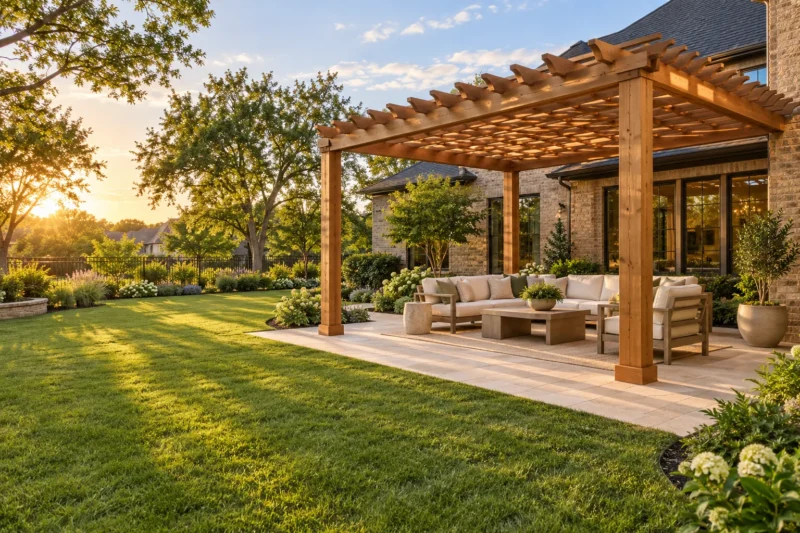
Open pergolas create changing patterns of shade. Orientation, spacing and the sun’s position affect coverage. A solid cover is a different structure and approval discussion; don’t assume an open pergola provides the same protection.
Before adding a large shade structure, see whether moving the chairs or reducing exposed paving would help. Keep the trees properly cared for, and don't count on future plant growth for shade you need now.
Think about touch points and reflected heat
Deck boards are only one contact surface. Consider rails, steps, seating and nearby walls. Review the selected product’s guidance about reflected sunlight and other heat sources where relevant.
Fans, lights and powered shade need suitable mounting and electrical work. Plan those with the structure instead of assuming you can attach them anywhere later.
Make comfort part of the written brief
- Hours and seasons of regular use.
- Barefoot and pet use expectations.
- Selected product and color samples.
- Shade coverage you want at those times.
- Any electrical accessories or future cover.
Read the pergola shade guide and wood-versus-composite comparisons. Ask the estimate to distinguish the deck from any shade or electrical scope.
If your shade plan includes a pergola, read our pergola project cost guide to compare the structure, site preparation and related work as separate parts of the estimate.
Check approvals for your project
Describe the deck height, attachment, stairs and structural work. HOA approval and city approval are separate checks.
Summer-comfort questions
Will a pergola shade the entire deck?
Not automatically. Check the design and changing sun position against the area you want shaded.
Can a cool-looking color guarantee a cool surface?
No. Evaluate the actual product and exposure rather than appearance alone.
Should shade be planned before construction?
Yes, because supports, layout, wiring and approvals may be affected.
Product-specific checks
Deck and structure approval resources identify where to confirm the planned work. Follow the selected decking manufacturer’s heat and care guidance; no universal surface-temperature figure is claimed here.
Know someone planning a yard project?