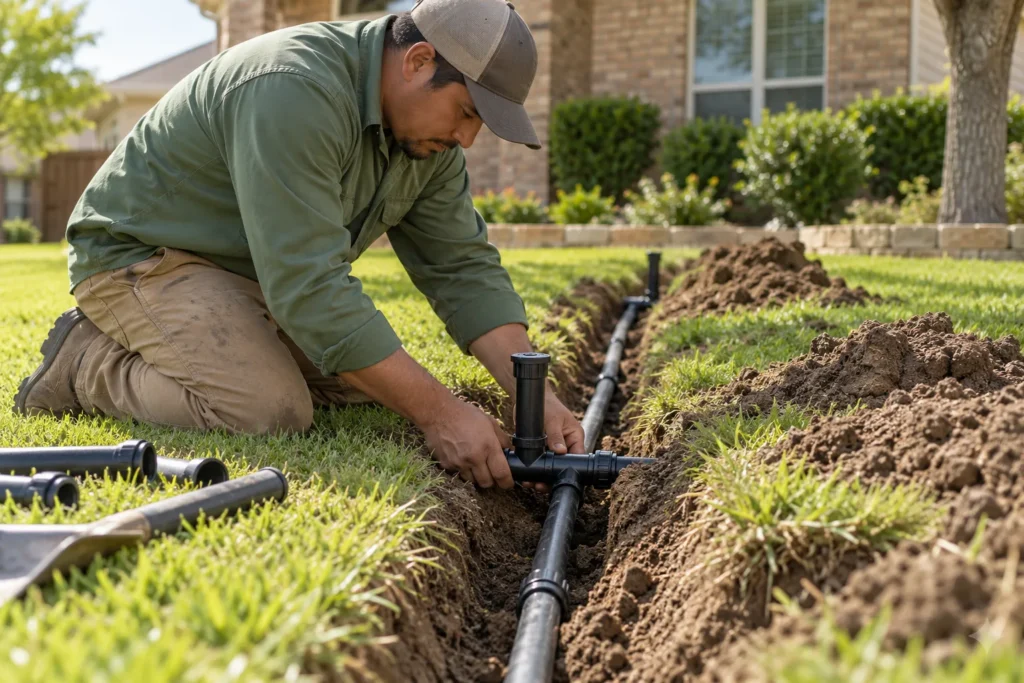
Look at the root zone you need to water
EPA WaterSense describes microirrigation as slow, low-flow delivery near plant roots. That can suit many beds, but the layout and maintenance still matter. A few emitters placed without considering root coverage don’t become efficient simply because they’re called drip.
Sprays distribute water above ground. Plant growth, wind and obstacles can affect where that water lands. Watch the current system operating before deciding which approach solves the actual problem.
Compare the practical differences
| Question | Drip or microirrigation | Spray irrigation |
|---|---|---|
| What gets wet? | Selected root areas according to the layout. | An above-ground pattern that must reach the bed. |
| What can hide a problem? | A blocked or damaged section may be less obvious. | Tall plants can obstruct the spray. |
| What changes over time? | Root coverage needs may change as plants grow. | Growth and pruning can change the pattern. |
| What must be coordinated? | Pressure, filtration, flow and scheduling. | Nozzle selection, placement and scheduling. |
Don’t compare watering time alone. A longer low-flow run and a short spray run aren’t equivalent volumes or coverage. Have the system designed and scheduled for the actual planting.
Converting a bed takes more than changing a head

Does the flower bed share a sprinkler zone with lawn or other plants? They may need different watering. The new setup needs to suit the water supply and use parts that work together.
Include pressure regulation, filtration and accessible maintenance points where the selected system requires them. Ask what happens to unused heads and lines and how the layout will be recorded before it’s covered.
Group plants around similar needs
A bed with widely different plant needs is harder to irrigate consistently. Review sun, soil conditions and mature plant size as well as appearance. A new planting plan is an opportunity to correct the layout instead of recreating the same watering problem.
Plan the bed refresh alongside the irrigation. If the bed is persistently wet even when irrigation is off, investigate the source before adding watering equipment.
What to learn before the crew leaves
- Which controller zone serves the bed.
- Where shutoffs and serviceable components are located.
- How to notice a failed or blocked section.
- How schedules change with establishment and weather.
- What maintenance instructions apply to the selected equipment.
Our sprinkler and irrigation service can assess the existing system. Use the irrigation cost and approval guide for a broader installation scope.
Check approvals for your project
Ask which plans, backflow checks and inspections apply to the planned installation or alteration.
Bed-watering questions
Does drip eliminate maintenance?
No. It still needs inspection, suitable components and attention to plant coverage.
Can beds and lawn share a schedule?
Sometimes existing systems do, but determine whether their needs and equipment match before assuming that arrangement is appropriate.
Will changing to drip fix standing water?
Not necessarily. Identify leaks, runoff and drainage conditions instead of assuming the delivery method is the only cause.
Watering reference
EPA WaterSense microirrigation resources explain the method and planning considerations. No specific water-saving percentage is promised for your property.