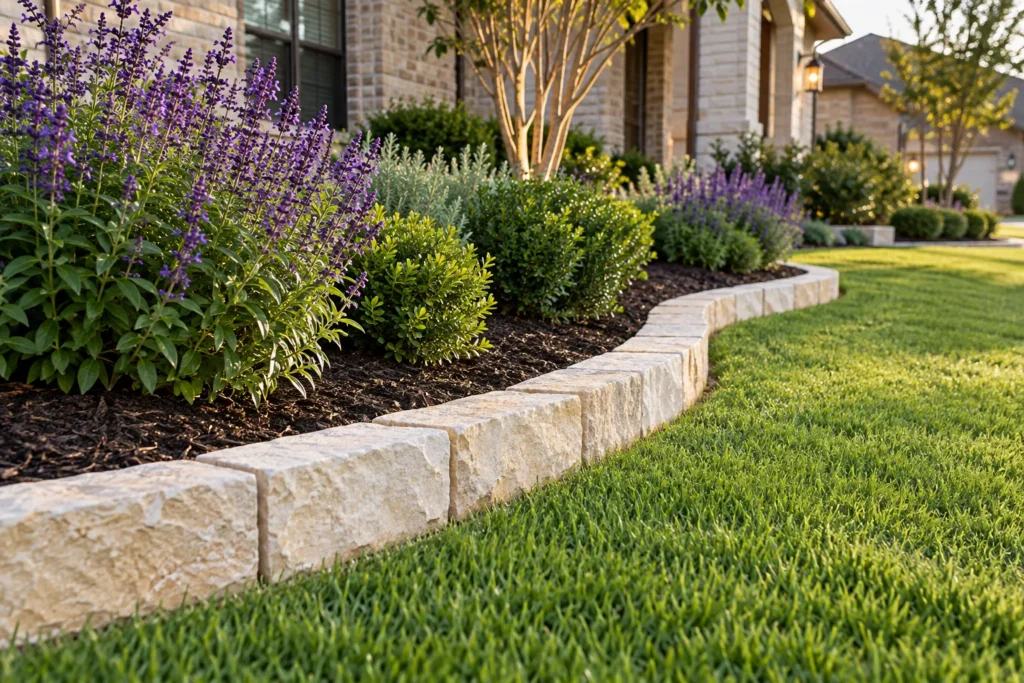
Layer count is a visual choice and a site question
Choose two or three layers by comparing the finished height, surrounding landscape and what the border must do. The number of courses doesn’t show whether a wall is structurally suitable or exempt from approvals.
Plano Landscaping offers two- and three-layer stone options, including Austin stone. Ask to compare them at the actual location. A third layer may look balanced beside a large bed but heavy around a small tree.
Most importantly, don’t raise soil against a tree trunk just to fill a taller ring.
What changes when you add a layer?
| Consideration | Two layers | Three layers |
|---|---|---|
| Visual scale | A lower frame around the bed. | A taller, more prominent feature. |
| Material quantity | Less stone for the same route, subject to dimensions. | More stone and potentially different preparation needs. |
| Finished height | Depends on stone dimensions and installation. | Confirm actual height rather than counting courses alone. |
| Soil retention | Must be assessed if holding back soil. | Extra height does not establish adequate support. |
| Tree setting | Keep root flare and roots protected. | Do not fill to the top by burying the trunk. |
Compare the same stone size when looking at examples. Two courses of one product can differ substantially in height from two courses of another.
Look from the house, path and street

Mark the proposed route and approximate height before deciding. Check how the edge relates to windows, paths, existing masonry and the size of the planting area.
Ask whether the border should remain level, step with the terrain or follow another agreed approach. A photograph from one angle can hide uneven ground and awkward transitions.
Keep access practical. Consider walking routes and maintenance around the outside of a tree ring, not just the interior planting space.
The tree should not have to adapt to the stone
The trunk’s transition into the roots should not be buried under added soil or mulch. University of Maryland Extension’s mulching guidance recommends keeping mulch away from the trunk.
Don’t cut important roots to make a perfect circle or dig a support trench without considering the tree. Ask for a tree assessment if roots or tree condition make the layout uncertain.
A taller outer edge doesn’t mean the inside should be filled to the same height. Discuss the existing grade and a layout that respects it. If the design only works by burying the tree base, revise the design.
When a border becomes more than decoration
If the feature holds back soil, supports a slope or sits near a load, describe that function to the installer. Calling it “edging” doesn’t settle the design requirements.
Ask where runoff will go and whether the border will change an existing drainage route. Random gaps or more mortar won't automatically solve a water problem.
For a true retaining function, explore retaining-wall assessment. For recurring wetness, address drainage before finalizing the border.
 Plan water movement
 Discuss stonework scope
Layer count does not settle whether the border must retain soil: compare decorative edging with a retaining wall.
Estimate the route before comparing layers
For a rough circular layout, circumference is diameter multiplied by pi. A hypothetical 10-foot diameter circle is about 31.4 linear feet before installation allowances. That’s a measuring example, not a material order or price quote.
Actual stone dimensions, cuts, curves and the installation method affect quantities. Ask the estimate to identify material, course count, finished height, support, removal and cleanup.
Use the stone edging cost guide to compare scope. If you prefer a quieter edge, compare Benda Board and stone.
Agree on these five details
- The marked route and actual finished height.
- The selected stone and expected color variation.
- The function: decorative boundary or retained soil.
- Protection of tree roots, irrigation and water routes.
- Preparation, cleanup and surrounding restoration.
Share wide photos rather than only a close-up of a stone you like. The surroundings are what make the layer choice work.
Plan Your Stone Border or Tree Ring →Check approvals for your project
A decorative bed edge and a wall holding back soil do different jobs. Check approval requirements for the actual height, position and purpose.
Layered border questions
Is three layers always stronger?
No. Strength and suitability depend on the complete design and support, not course count alone.
Should I fill a tree ring to its top?
Not if that buries the root flare or changes the tree’s grade inappropriately. Design around the tree.
Can I add a layer to an old border?
Have the existing support and proposed function assessed first. Don’t assume the old installation can carry the change.
Will the two-layer option always cost less?
Material quantity is only part of the scope. Compare the actual route, preparation and installation.
Sources and limits
Reviewed October 4, 2026. Extension guidance supports keeping mulch away from trunks. The material and measuring examples are planning aids, not structural specifications. Images are illustrative. Obtain project-specific advice where roots, retained soil or drainage affect the design.