Know someone planning a yard project?
A complete estimate follows the project all the way to handover
Look for the removal method, access, utility work, approvals, material handling, fill and compaction, final grading, cleanup and exclusions. The proposal should also say how changes are approved and what paperwork you receive afterward.
“Remove pool and fill hole” leaves too much unexplained. Before comparing totals, ask each contractor to price the same outcome. A lawn-ready area, a rough-graded area and ground intended for future construction are different requests.
For a quick starting point, write one sentence describing the result you want: “Remove the pool and prepare the area for sod, with the existing irrigation adjusted.” That sentence makes missing work easier to spot.
Start with what stays below ground
Ask whether the proposal is for full removal or partial removal and infill. The written description should identify what is removed, what remains, and how the remaining structure is treated. A drawing or marked photograph can make this much clearer than the word “demolition.”
Don’t assume that a partially removed pool is suitable for a future building simply because it has been filled. Explain any future patio, structure or other load before agreeing to the method; suitability needs project-specific assessment and local approval.
Our full-versus-partial removal guide explains that decision. The estimate then needs to turn the chosen approach into a defined scope.
Compare these items line by line
| Work | What the estimate should explain |
|---|---|
| Access | Equipment route, gate or fence changes, protection and restoration. |
| Utilities | Who identifies, disconnects or caps pool services and documents the work. |
| Approvals | Permit application, fees, inspections and responsibility for corrections. |
| Demolition | Removal limits and treatment of any retained shell. |
| Materials | What leaves the site and what material is permitted to remain or be brought in. |
| Fill | Specified material, placement, compaction requirements and any testing. |
| Finish | Final levels, drainage, topsoil or lawn preparation and cleanup. |
| Handover | Inspection records, relevant testing, warranty terms and final scope record. |
If an item is excluded, that’s useful information—not automatically a reason to reject the quote. The problem is discovering an exclusion after the work has started. Ask for allowances to be identified separately from fixed amounts.
Include the route to the pool, not only the pool itself
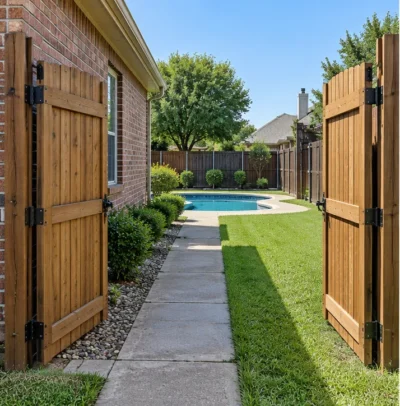
Walk the proposed equipment route together. Gates, tight turns, paving, irrigation and nearby landscape features can affect the job. Ask which surfaces will be protected and which disturbed areas are included in restoration.
Take photos before work begins. If a fence section needs removing, include taking it down and putting it back in the estimate. If sprinkler lines cross the route, discuss checks and repairs; they aren't automatically part of demolition.
These questions also matter when the pool is far from the street. An easy-looking excavation can have a difficult route for equipment and material movement.
Use the site photos to settle responsibility for access and disconnections: follow the pool-removal preparation checklist.
Ask for a specification, not just “dirt”
The proposal should describe the approved fill approach and any compaction or testing requirements for the planned use. Don’t infer that every demolition fragment may be buried. Material acceptance needs to follow the requirements that apply and project plan.
Plano’s published pool-demolition handout describes utility checks, drainage openings and a final backfill inspection. The document is dated 2010; confirm current requirements with the city. It isn’t a complete fill-material specification.
Ask when inspections happen and who books them. Know what needs checking before it's covered up. Photos of the finished lawn can't show those earlier checks.
Permit fees and responsibilities
Full or partial removal, utility disconnections and backfill inspections should be confirmed for the property. Plano Landscaping can handle the permit paperwork.
Ask whether the estimate includes permit fees, application work and inspections or charges them separately. Check the current fee for your address. A neighboring city's fee may be different.
Separate demolition from the yard that follows

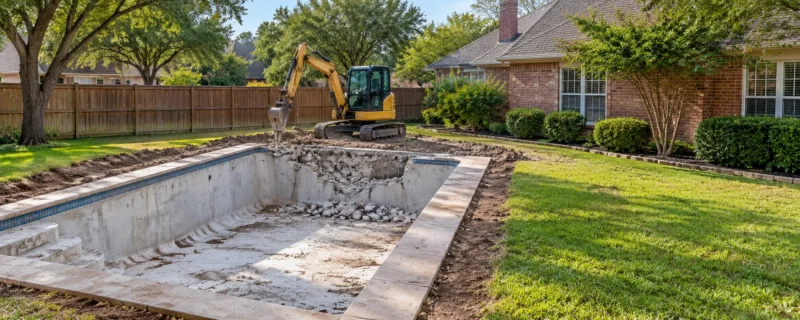
For the Plano project shown here, the pool-demolition line item was $11,095.00. That amount excluded the sod installed afterward, shrubs, tree and stump removals, and irrigation repairs.
This is a documented price for one part of one project, not a standard price for your pool. It helps show why demolition should be priced separately from the other improvements you can see in the finished yard.
Use the pool-removal cost guide for budgeting and its city permit directory to find the appropriate local starting point.
Put changes and guarantees in writing
Plano Landscaping’s quoted pool-removal price is guaranteed unless the scope changes or new modifications are requested after work begins. We can handle the permit paperwork, and our pool-removal work includes a five-year warranty.
Get the agreed work, warranty coverage and conditions in writing. Ask explicitly whether city fees are included; help with the paperwork doesn't answer that question by itself.
Before approving a change, ask what work is changing, the price difference and any schedule effect. Keep that approval with your project records. A clear change process protects the original agreement and lets you make informed decisions.
Decide how finished the yard should be
For a lawn, discuss grading, suitable preparation, irrigation and sod installation. For artificial turf, discuss its base and drainage needs and how existing irrigation will be handled. A patio or other structure needs its own support assessment.
If you're undecided about the finish, ask for those additions as separate options. The demolition work still needs to be clear.
Request a Pool Removal Estimate Plan the new lawn
 Compare artificial turf
Questions to settle before signing
Are permit fees included?
Only if the proposal says so. Separate application assistance, city fees and any required inspection or documentation costs.
Can demolition debris stay in the pool?
Don’t assume it can. Ask for the proposed material handling and verify it against the approved requirements.
Is sod included in pool removal?
Only when listed. Our documented Plano project priced demolition separately from sod and other yard work.
What should I keep afterward?
Keep the contract, approved changes, relevant permits and inspection records, any specified testing and the written warranty.
Sources and scope notes
This checklist is planning guidance, not a fill specification or certificate of future construction suitability. The featured project amount, exclusions and business commitments were supplied by Plano Landscaping; the invoice was not independently reviewed. Confirm current approvals, removal limits, material handling, fill verification, restoration and warranty coverage in your written agreement.
Know someone planning a yard project?