Know someone planning a yard project?
START HERE
Decide what comes next before the pool comes out
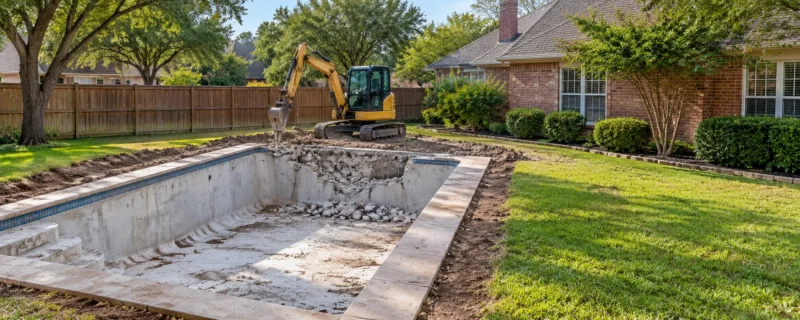
Imagine two homeowners removing similar pools. One wants an open lawn. The other hopes to add a room to the house in a few years. Their yards might look similar after restoration, but the work and documentation needed for those future uses may be very different.
Tell the removal contractor about both your immediate plan and any serious future possibility. Ask what will remain underground, how the fill will be placed, and what the next installer will need to know. “We might build here later” belongs in the first conversation.
Full removal doesn't mean automatic permission to build
Removing the shell is only one part of preparing a site. A future structure still needs an assessment of the ground, its foundation requirements and applicable approvals. Partial removal may leave buried shell material that the next designer needs to account for. Don't choose a removal method from price alone if future construction is part of your plan.
Plano's published pool-demolition handout calls for a permit and inspections, including checks associated with disconnecting plumbing and electrical service and a final backfill inspection. It doesn’t certify the finished area for every later use. Confirm the current project requirements with the city; a future structure is a separate question.
Source: City of Plano: pool demolition and backfilling requirements
Understand pool removal and restoration →Before choosing the next surface, understand pool infill compaction testing and pool removal and property-value considerations.
MAKE THE SPACE YOURS
Six directions for your next backyard
You can combine these. A smaller patio beside a generous lawn may be more useful than paving the entire old pool area. Let everyday activities decide how much space each feature gets.

OPTION 01
An open lawn for everyday use
Planning a pool-to-lawn conversion? Measure the planned lawn footprint, including the space you intend to reclaim, then estimate the sod installation portion. Pool removal, filling, compaction, drainage and irrigation are separate costs.
If the pool occupied most of the backyard, simply getting open space back may be enough. A lawn leaves room for a game, a dog, or a few movable chairs without committing the whole area to a fixed layout.
Choose the grass for the sunlight and wear the area will receive. Bermuda, St. Augustine and Zoysia differ in shade tolerance, texture and upkeep; the best-looking sample isn’t automatically the best fit. Our grass comparison guide explains those tradeoffs.
Plan before finishing: the prepared soil, final grade, sprinkler coverage and establishment routine. Arrange who will check the new sod after installation rather than treating delivery day as the end of the project.
Source: Texas A&M AggieTurf: turfgrass selection and species
Explore sod installation →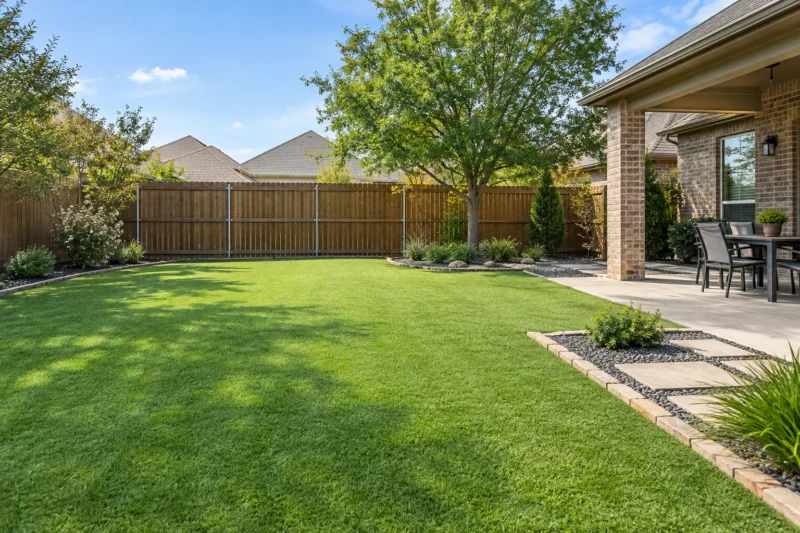
OPTION 02
Artificial turf for a defined lawn or pet area
Artificial turf may appeal if you want to avoid mowing in a particular area. Think through the routine you're taking on instead: removing debris, cleaning pet waste and maintaining the selected product.
The base and drainage still matter. A draining turf backing can’t, by itself, solve unsuitable ground below it. Discuss rinse-water management for pets and how the turf meets surrounding beds and paving.
Think about summer use: synthetic turf can become hot in sunlight. Consider where pets or children will rest and when you actually expect to use the space, rather than choosing from an evening photograph.
Source: Penn State: synthetic turf surface-temperature research
Compare artificial turf options →For the new lawn surface, compare care as well as appearance: compare artificial turf and sod; plan for summer turf temperatures; review pet cleaning and drainage.
OPTION 03
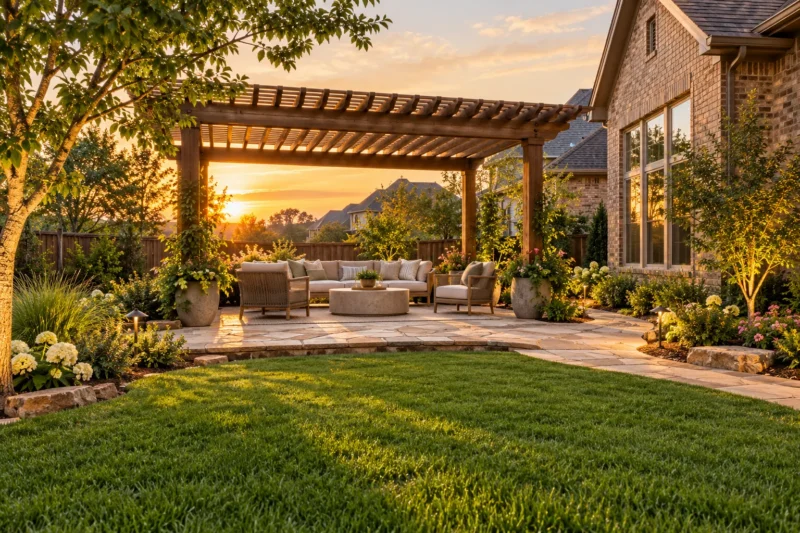
A patio you will actually sit on
Before choosing pavers or concrete, put chairs where you think the patio should go. Walk from the back door with a tray. Pull a chair away from the table. Check whether people can pass comfortably without stepping into a bed.
The most useful location may be beside the former pool rather than directly over its center. Keep the relationship to the house, shade and access in mind.
The ground comes first: a patio needs preparation suited to the paving system and intended load. CMHA identifies subgrade compaction as important to concrete-paver performance. Over a former pool, the contractor must also evaluate the removal and fill history; a generic base detail isn’t enough.
Source: CMHA: Construction of Interlocking Concrete Pavements
Plan a patio or walkway →Test the usable layout before choosing the paving footprint: plan patio space around furniture and movement.

OPTION 04
Planting beds with an open center
If you would rather look at flowers and foliage than a large stretch of lawn, use beds to frame the yard. Leave enough access to reach the plants for watering, pruning and cleanup.
Start with the conditions: sun, soil, available rooting space and irrigation. Texas A&M's landscape-design guidance encourages planning around the site and the household's needs. A plant list should follow that work, not come before it.
Don’t overlook what is below: tell the planting designer about any retained shell or buried work. Large trees, deep planting holes and heavy raised beds need their own location and soil assessment. A few inches of attractive topsoil don’t explain the whole root zone.
Source: Texas A&M AgriLife: Earth-Kind landscape design
Explore bed borders and stonework →OPTION 05
A shaded place to gather
A pergola or other shade feature can give the yard a destination. First decide when you want shade: morning coffee and late-afternoon sitting may call for different placement.
A pergola with open slats won't behave like a solid roof. Talk about the actual shade pattern, views from the house, furniture and any desired lighting before selecting its size.
Treat supports as a separate design question: posts and foundations create loads that lawn restoration doesn’t address. Establish the intended footing locations and get the necessary site and approval review before assuming a structure can sit over the former pool.
Explore outdoor living →
OPTION 06
A simple yard now, with room for later
You don't have to build the finished vision in one go. Restore a usable yard now and reserve a possible patio or seating area for later. The key is to tell the team about that future phase before filling and finishing the space.
Keep the equipment route accessible and identify where future wiring, irrigation or other work may go. Otherwise, a second project can mean disturbing the lawn or border you just paid to finish.
Keep the plan modest and clear: a rough sketch showing “lawn now, possible patio here later” is useful. It communicates intent without pretending to be a construction drawing or promising that a later structure is approved.
See related hardscaping services →LOOK PAST THE FINISHED PHOTO
Compare the options by how you will use them
These are planning tradeoffs, not a price ranking. A small project with difficult access can cost more than a larger, simpler one.
| Option | Useful when you want… | Care to plan for | Resolve first |
|---|---|---|---|
| Natural sod | Open, flexible green space | Mowing, watering and establishment care | Light, soil preparation and irrigation |
| Artificial turf | A lawn surface without routine mowing | Debris and pet-waste cleanup; product upkeep | Base, drainage and heat exposure |
| Patio / paths | Seating, dining and a dependable route | Surface cleaning and system-specific upkeep | Ground suitability, base and runoff |
| Planting beds | Seasonal interest and a framed yard | Plant care, weeds, mulch and irrigation | Rooting space, light and buried conditions |
| Pergola / shade feature | A defined place to spend time | Material and fixture maintenance | Support design, location and approvals |
| Phased combination | Useful space now and choices later | Care for the temporary finish | Access routes and the eventual plan |
Swipe the table sideways on smaller screens. All options depend on a suitable site and agreed restoration work.
TRY A LAYOUT BEFORE YOU COMMIT
Three ways to divide the yard
These simple diagrams illustrate space planning. They aren’t to scale and don’t establish where foundations, planting or drainage can safely go.
Room to play
Choose this direction if the main thing you miss is open space. Keep fixed features near the edges and preserve a clear route from the house to the gate.
Room to gather
Put the sitting area where you’ll use it most, then keep some flexible space. Test the furniture arrangement before deciding how much paving to buy.
Room to grow
Finish the essentials now and reserve choices for later. Keep the future work route open and document what is beneath the temporary lawn.
Try your favorite with a garden hose laid on the ground to mark an edge. Look at it from inside the house, too. You may discover that a narrower patio gives you all the seating you need and a much better view of the garden.
WHAT YOU DON'T SEE MATTERS
Ask what “ready for landscaping” includes
That phrase can mean different things in different quotes. One contractor may mean rough fill. Another may include final grading and soil preparation. Before comparing totals, ask what condition the yard will be in when that scope is finished.
Fill and finished soil have different jobs
The work below the surface has to suit the planned use; the surface also has to suit the lawn or planting. Ask what material is being placed, how placement is controlled and what checks or records are appropriate. Don't assume a layer of topsoil makes unknown fill suitable for paving or a structure.
Follow the water through the whole yard
Talk through where runoff enters, where it collects and where it will leave. Include water from the roof and adjacent paving. The aim is a coordinated drainage plan, not simply making the former pool area look flat.
Locate more than the public utilities
Share what you know about pool wiring, irrigation, lighting and other private lines. Texas811 explains that some privately owned lines are outside the public utility locate process and may need separate locating. Establish responsibility before excavation; don't assume every buried line will be marked automatically.
Source: Texas811: public and private utility locating
Keep a small project record
Save the removal work, the pool footprint, photos during the work, permit and inspection records, and any fill or compaction documentation provided. If you bring in a patio contractor later, give them that information before they price the job.
A PRACTICAL ORDER OF WORK
Plan together, even if you build in stages
- Choose the next use. Separate what you want now from what you may add later. Identify structures early.
- Agree on removal and review requirements. Clarify the scope, utility arrangements, city requirements and who coordinates inspections.
- Complete the ground and water work. Address fill, grading and any required drainage before the finished surfaces.
- Coordinate the new features. Plan access, paving and any required wiring or irrigation changes before surrounding lawn and beds are finished.
- Install the living landscape and hand over care. Discuss watering, rooting and access restrictions for new sod, or the care instructions for other surfaces.
The exact sequence depends on the site and inspection requirements. Use this as a discussion outline, not a substitute for the project plan.
If you choose lawn, our Sod Aftercare guide explains the first 90 days. If you want evening use, plan landscape lighting early enough to coordinate its wiring routes.
If the finished yard will include natural grass, coordinate restoration with the season. Plan when the new sod should go in →
Keep later work in the plan before the first finished surface goes in: plan a usable first phase and future access.
PRICE THE YARD YOU WANT BACK
Budget beyond the demolition line
For published DFW price examples and a scope checklist, read our Plano pool removal & demolition cost guide.
A removal price alone doesn't tell you what it will cost to enjoy the finished yard. Ask for the work to be separated into understandable parts so you can decide what belongs in the first phase.
- Removal: pool, deck, spa, equipment, disposal and access restoration—only as included in the written description of the work.
- Ground preparation: fill, placement, final grade, drainage and preparation for the selected finish.
- New features: lawn, turf, paving, beds, shade or lighting.
- Handover: cleanup, care instructions and any separately identified testing or documentation.
For example, keeping a sound existing patio may free up budget for the open lawn you actually want. Conversely, replacing the entire deck while equipment is already there may belong in the first phase if that’s your settled plan. Ask for those alternatives to be priced; don't assume either is always cheaper.
We haven't attached a universal dollar range because removal method, access, fill and the next use change the scope substantially. Compare estimates for the same finished condition, including exclusions and how changes will be approved.
Tell us what you want to do with the space
Send your address, a few pool and access photos, and one sentence about your goal: “more lawn,” “a place to sit,” or “a garden with a path” is enough to start the conversation.
Questions homeowners ask before starting over
Can I put a patio directly over the old pool?
Possibly, but only after the site and proposed paving system are assessed. The remaining shell, fill history and ground preparation matter. Have the patio plan reviewed before assuming ordinary lawn restoration is sufficient.
How long should I wait before landscaping?
There isn't one safe waiting period for every project. Readiness depends on completed inspections, fill and grading work, site conditions and the finish being installed. Waiting a certain number of weeks doesn’t replace suitable preparation. Ask what has to be verified before your next phase begins.
Can I plant a tree where the pool was?
Don’t pick the location from the surface alone. Rooting space, retained materials, utilities and the tree's mature needs all matter. Have the proposed location assessed and consider whether a different part of the yard would give the tree better conditions.
Does artificial turf solve drainage problems?
No. The turf, base, underlying ground and outlet need to work together. If water already collects in the area, address that before installation. Explore artificial turf and yard drainage as connected decisions.
Can I keep part of the pool deck?
That may be possible if its condition, support and relationship to the removal work allow it. Mark the portion you hope to keep and have the contractor evaluate it. Include protection, cuts, transitions and any repair responsibilities in the scope.
Will removing the pool increase my home value?
There’s no guaranteed increase. Buyer preferences and the local market differ, and a poorly documented project can introduce questions. Make the decision around your use of the property and discuss resale expectations with a local real estate professional rather than relying on a promised return.
Do I need a separate landscaping plan if I only want grass?
You may only need a simple agreed scope, but it still needs to cover grade, soil preparation, irrigation and care. See sod installation and the grass selection guide before deciding what to install.
Sources & further reading
Official guidance supports the permit, utility, turf and paving points linked above. Layouts, comparisons and project-sequencing suggestions are editorial planning examples, not engineering designs. No source is presented as endorsing Plano Landscaping.
- City of Plano: pool demolition and backfilling requirements
- CMHA: Construction of Interlocking Concrete Pavements
- Texas A&M AgriLife: Earth-Kind landscape design
- Texas811: public and private utility locating
- Texas A&M AggieTurf: turfgrass selection and species
- Penn State: synthetic turf surface-temperature research
Editorial review date: October 3, 2026. Confirm current local requirements and the property's specific conditions before work begins.
Explore more Knowledge Hub guides →Know someone planning a yard project?