The short answer
Check sprinkler coverage before the new lawn arrives, while there is time to correct a missed strip, a leak or a zone that does not run. A controller turning on is not the same as water reaching every part of the sod. The check should connect the actual coverage, finished lawn layout and local watering requirements with a clear handover for the person caring for the installation.
Why this belongs before the sod delivery
New sod needs reliable moisture while it establishes. If one strip is missed, increasing the time for the whole zone can overapply elsewhere without solving the coverage gap. Finding that issue after pallets arrive creates a conflict between caring for delivered grass and completing repairs. Check the system while the schedule can still change.
Plano Landscaping requires working irrigation for new sod installation. Ask what will be checked, which repairs are included or separate, and who confirms readiness. This guide focuses on that pre-installation handover. Our sod aftercare guide covers monitoring and adjustments once the lawn is installed.
Map the new lawn against the existing zones
Mark the areas becoming lawn, the areas staying as beds and any new path or edge. Compare that plan with the zones that actually supply water. A system designed around an old bed shape may miss a newly expanded lawn or spray a new path. The previous controller settings do not certify coverage for a changed landscape.
Include narrow strips, exposed paving edges, slopes and areas beneath moving shade. Record known repairs and any zone whose purpose is unclear. If one zone also supplies retained planting, ask how proposed changes affect it. A simple marked photo can help the household and irrigation professional discuss the same locations.

Watch a zone operate before changing its time
| Observation | What to record | Why it matters before sod |
|---|---|---|
| A head does not rise or spray | Zone, location and visible condition | A timer change cannot repair a broken component |
| Water hits paving or a fence | Pattern and nearby obstruction | The intended lawn may be missed |
| One area stays wet | Timing, rainfall and whether a leak is suspected | Extra irrigation could worsen saturation |
| A dry strip follows the edge | Head positions and operating pattern | Fresh seams may receive uneven moisture |
| Fine mist or weak throw | Which zones and operating conditions | An irrigation professional can assess the cause |
Do not diagnose pressure, nozzle compatibility or buried pipe condition solely from a short video. Those observations help direct a professional check. Explain when the issue occurs and whether other water uses were running. Avoid making several simultaneous adjustments that leave no clear record of what changed.
What catch cups can show—and what they cannot
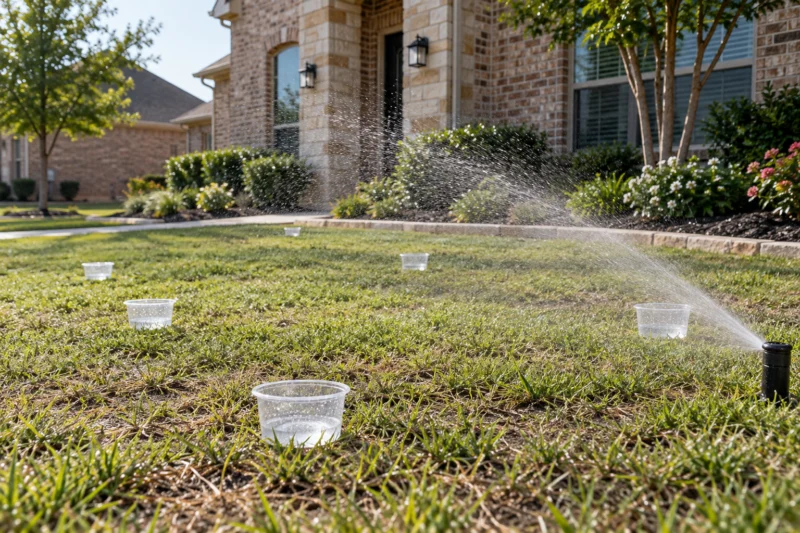
A catch-cup check can reveal differences in collected water across a zone when performed consistently. Use matching containers, a documented layout and the same observation period so the readings are comparable. Record conditions such as wind. A formal audit involves more than placing one cup where the lawn is already green.
Use the results to ask better questions rather than treating one cup as permission to set a permanent run time. A uniform amount at the surface also does not prove the root zone is suitable: soil moisture, runoff and infiltration still matter. If you need a schedule or changes to the system, have the appropriate irrigation professional evaluate the findings.
Repair, retest, then protect the system during preparation
- CheckIdentify zones, coverage and visible faults.
- CorrectAgree on necessary irrigation work.
- RetestConfirm the correction before grass delivery.
- Protect & hand overLocate components and record the care settings.
Planning sequence; the assessment determines the work.
Tell the sod crew where heads, valve boxes and known pipes are located. Final grading or a new border can change a head’s height relative to the lawn. Check those relationships during preparation, then make sure the working pattern still reaches the new area. Leaving a component buried beneath sod makes later adjustment harder.
Where design, installation or repair is required, use the appropriately licensed irrigation professional. TCEQ provides licensing and consumer resources. This article does not replace a professional system design, backflow evaluation or the requirements that apply to your work.
Controller settings need an owner
At handover, know how to identify each relevant zone, stop watering, make an agreed adjustment and find the installer’s care instructions. Check for duplicate start times or programs that may run without the person caring for the lawn realizing it. Label the zones in language the household understands, such as “front strip beside driveway.”
A schedule should fit the actual installation, soil moisture, weather and the current rules from the water provider on your bill. Do not assume a new-landscape allowance applies automatically. Verify any required authorization and permitted times before delivery. We link to city resources in the aftercare guide so you can check the current requirements.

Passing the check does not end moisture monitoring
A functioning system can still need attention after weather changes. Inspect the sod pad and the soil beneath at accessible locations as directed, and compare exposed edges with low or shaded areas. Report persistent wetness or a widening dry patch instead of increasing every zone in response to one area.
No fixed number of minutes works for every sprinkler type and every lawn. Keep the professional handover together with actual observations. Our yellow-sod diagnostic guide explains why color alone does not distinguish dryness, saturation, product injury or seasonal change.
What to request in the written handover
Ask for the checked zones, faults found, work completed and items still excluded or unresolved. Keep a simple zone map and any changed components or controller settings. Clarify who to contact for irrigation faults and who handles questions about the sod response. A homeowner should not have to work out responsibility while the lawn is deteriorating.
If repairs are pending, do not treat the delivery date as immovable. A short reschedule can be more practical than laying grass beside a nonworking zone. Use the Lawn Calculator for initial area planning, then confirm irrigation readiness and measurements together before approving the final installation scope.
If the existing lawn is changing, plan Bermuda conversion and pretreatment before locking in the installation date.
Common questions
Does a working controller mean the lawn is ready for sod?
No. Confirm that the relevant zones operate and cover the actual new lawn area, and resolve known faults before delivery.
Should I just run the system longer for a dry patch?
First check coverage and moisture. Extra time may overwater other areas while a missed strip remains dry.
Do catch cups replace an irrigation inspection?
No. Consistent measurements are useful evidence, but component condition, pressure, layout and the care schedule may need professional evaluation.
Who should perform repairs or system changes?
Use the appropriately licensed irrigation professional and confirm the requirements for the proposed scope with them.
Sources and further reading
These primary references support the planning principles. The diagrams are conceptual; a contractor must assess the actual site and selected products.
YOUR NEXT STEP
Bring a useful brief to your estimate
Share the new lawn area, available zone map, controller make, photos or videos of missed strips and known leaks, and the intended installation date. Ask which checks and repairs must be completed before delivery.
Explore our sprinklers & irrigation service and discuss the site-specific scope.
Plan My Pre-Sod Irrigation Check →