Know someone planning a yard project?
New sod is a finish, not a diagnosis
Replacing grass makes sense when you have identified the conditions behind the damage and have a plan for them. Covering the same shaded, soggy or heavily worn spot with fresh sod can leave you facing the same decision again.
Start with three questions: Is the grass actually dead? Is the site suitable for the grass you want? What will change before installation? Brown color alone doesn’t answer the first question. Texas A&M AgriLife describes browning during dormancy and stress in warm-season lawns, so assess the grass and conditions before assuming the entire area needs removal. AgriLife’s Bermudagrass management calendar.
This guide is for an existing lawn you’re considering replacing. If sod was recently installed and is turning brown, start with our new-sod troubleshooting guide instead. Establishment problems deserve prompt attention.
Use these guides to plan the next step: overgrown-lawn preparation and Bermuda conversion and yellow-sod diagnostics.
Read the pattern before choosing the remedy
Walk the yard and take one wide photo, then close-ups of the affected areas. Note when the change started and whether the same area has failed before. These clues help an assessment; none proves a cause by itself.
| What you see | What to investigate | Useful next step |
|---|---|---|
| Thin grass beneath trees or beside a wall | How much light reaches the lawn across the day and season. | Photograph the area morning, midday and afternoon. |
| Dry strips beside healthy grass | Irrigation coverage, obstructions and differences in site conditions. | Describe the pattern and observe the relevant zone when permitted. |
| Wet, soft ground or recurring puddles | Rainfall runoff, irrigation leaks and where water can leave the area. | Record whether wetness follows rain, watering or neither. |
| A worn route to the gate | Repeated feet, pets or equipment using the same line. | Consider a path or a change in use as well as grass. |
| Expanding irregular patches | Disease, pests, injury or other causes requiring identification. | Seek diagnosis before treating or replacing. |
| Broad seasonal browning | Grass type, season and whether living growth remains. | Assess dormancy or stress before calling it dead. |
A shaded side yard and a sunny dog run may look equally bare, yet need very different plans. Split the yard into problem areas rather than looking for one treatment for everything.
Check the light the grass actually receives

A patch that used to grow well can become less suitable as surrounding trees or landscaping change. Look at the whole day, not only the hour when you normally go outside.
AgriLife describes Bermudagrass as poorly suited to shade. St. Augustine generally tolerates more shade than other warm-season grasses, but it still needs light; “shade tolerant” doesn’t mean it will thrive in deep shade. Cultivar and site conditions matter. Bermudagrass guidance · St. Augustine management guide (PDF).
Use our Bermuda, St. Augustine and Zoysia comparison to discuss alternatives. Don’t assume changing varieties fixes a location where no suitable lawn grass gets enough light.
If the area is consistently unsuitable, a planting bed or planned walkway may be a better use of it. Discuss the existing trees before changing soil levels or cutting roots to make room for a lawn.
Separate a watering problem from a drainage problem

“Water it more” isn’t a useful answer until you know what is happening. A dry area may need coverage correction; an already wet area needs a different assessment.
EPA recommends checking irrigation zones for damaged or tilted heads and misplaced spray. Pooling between watering cycles can indicate an underground leak. Observe the symptoms without assuming they establish the exact fault. EPA’s sprinkler inspection guidance.
Before scheduling sod, ask where water is supposed to go after the work. The French drain, surface drain and grading guide explains why those approaches are not interchangeable.
Follow current city watering rules when checking and operating the system. Find official local resources in the city watering guidelines section.
Look below the leaves—and at how the space gets used
Compacted soil can limit turf root development, and shade adds another constraint. AgriLife’s shade-management guidance discusses both; replacing the surface doesn’t remove those underlying conditions. Managing turfgrass in shade (PDF).
Explain whether the area was used for construction access, stored materials or a regular walking route. Ask what preparation is appropriate rather than requesting the same amount of topsoil everywhere. Near mature trees, discuss root protection before excavation or grade changes.
A soil test can help with nutrient and soil-chemistry questions. It doesn’t, by itself, diagnose every dead patch, irrigation fault or drainage problem. Follow the laboratory’s sampling instructions and ask what test addresses your concern. Texas A&M soil testing resources.
Do not treat every brown patch as fungus
AgriLife’s turf disease guidance emphasizes proper identification and points to its diagnostic laboratory. If a patch is spreading or the cause remains unclear, seek an assessment before choosing a fungicide, insecticide or replacement lawn. A photograph and the word “brown” aren’t enough to select a treatment. AgriLife turfgrass disease guidance (PDF).
Bring a record of recent lawn products or treatments to the discussion. Avoid layering more products onto an unexplained problem simply because the grass has not improved.
Keep the grass, replace an area or change its use?
| Option | When to discuss it | What must be clear first |
|---|---|---|
| Keep and help the existing lawn recover | Useful living turf remains and the limiting condition can be addressed. | A realistic recovery plan for the grass and season. |
| Replace a defined area | Damage is concentrated and the rest of the lawn is worth retaining. | Preparation, grass match, boundaries and watering for the new area. |
| Replace a larger lawn area | Much of the lawn needs replacement or the chosen grass no longer fits the site. | The cause of failure, suitable grass and the full work scope. |
| Use a different surface or layout | Deep shade or recurring traffic makes a lawn impractical. | Tree needs, drainage, access and how the area will be used. |
There’s no universal percentage of bare ground that makes replacement mandatory. Agree on the outcome you want, what can reasonably recover and the cost of the alternatives. Don’t remove healthy areas just to reach an arbitrary threshold.
Artificial turf is one possible alternative, but it brings its own heat, cleanup and drainage decisions. Read turf versus sod before treating it as a maintenance-free solution. For a repeated walking route, explore walkways instead of expecting replacement grass to change where people walk.
Replacing grass with the same variety will not correct inadequate light, uneven irrigation or drainage. Compare Bermuda, St. Augustine and Zoysia against the cause of the bare areas, then confirm the named variety and available supply in your estimate.
Continue planning: compare North Texas grass varieties · review sod installation pricing · plan installation timing · read watering and aftercare guidance · discuss irrigation installation or repairs.
What should happen before the new sod arrives?
- Define the area. Mark what stays, what changes and which planting beds or paths are excluded.
- Address the limiting conditions. Agree on irrigation, drainage or other necessary work and who handles it.
- Select suitable grass. Match the cultivar to light, use and maintenance expectations.
- Confirm preparation. Put removal, soil preparation, levels and any additional work in writing.
- Plan establishment care. Decide who checks moisture, watering coverage and early problems after installation.
AgriLife treats site preparation and suitable grass selection as part of turf establishment. The right sequence should be reflected in the proposal, not left as an assumption. Turfgrass Establishment for Texas.
If the old grass has failed more than once, ask the direct question: “What are we changing this time?” A useful answer should describe the property and proposed work.
After addressing the cause of the bare patches, plan the timing. Decide when to install replacement sod →
Budget for preparation as well as replacement
Need a starting measurement? Use our free lawn square footage calculator to trace the lawn on a satellite map, excluding patios and planting beds. Then estimate your sod installation cost. Measurements and prices are approximate until we assess your property.
Plano Landscaping has a one-pallet, 450-square-foot minimum for sod installations. If your damaged area is smaller, explain that when you contact us so expectations are clear. Don’t assume a small patch has the same scope as a full installation.
Use the sod installation cost guide and calculator for the lawn portion. Additional grading, drainage and irrigation work are separate from that estimate. Ask which preparation is included and which items are additional.
Bring these details to your estimate
- Your address and rough lawn area.
- Wide photos, close-ups and the timing of the damage.
- Sun and shade photos from several parts of the day.
- Watering or puddling observations and any known sprinkler issues.
- Pets, foot traffic, recent construction or lawn treatments.
- Whether you want to keep existing grass, change varieties or redesign the area.
You don't need to diagnose the problem yourself. Tell us what you've noticed so we can discuss what to check next and whether another assessment is needed before installation.
Request a Sod Installation EstimateQuestions about replacing patchy grass
Can I lay sod directly over the old patchy lawn?
Ask how the old plants will be removed, how the new sod will touch the soil and what the finished ground level will be. Don't assume laying sod over the old surface is the agreed preparation.
Is brown grass definitely dead?
No. Dormancy and stress can change color. Assess the grass, season and site conditions before deciding what needs replacing. Recently installed sod should be checked promptly using the aftercare guidance.
Will a different grass fix shade?
Possibly, if the new grass is suitable for the actual light available. Even more shade-tolerant grasses have limits. Compare varieties and consider another landscape use for persistently unsuitable areas.
Do weeds mean the entire lawn must be replaced?
Not automatically. Identify the weeds and assess the existing lawn before choosing a plan. Don’t assume that new sod eliminates future weeds or corrects the conditions behind thinning.
Can I replace only one part of the yard?
Discuss the boundaries, grass match and care needs. Plano Landscaping’s sod installation minimum is 450 square feet, and the final work depends on the property.
What if the same patch keeps dying?
Document the repeated pattern and investigate the cause before another replacement. Light, water, drainage, wear and diagnosed biological problems can require different responses.
Sources & review notes
Sources reviewed October 4, 2026. The linked Texas A&M AgriLife and EPA resources support the specific grass, soil, establishment and irrigation points above. Observation tables and estimate checklists are planning guidance, not a diagnosis.
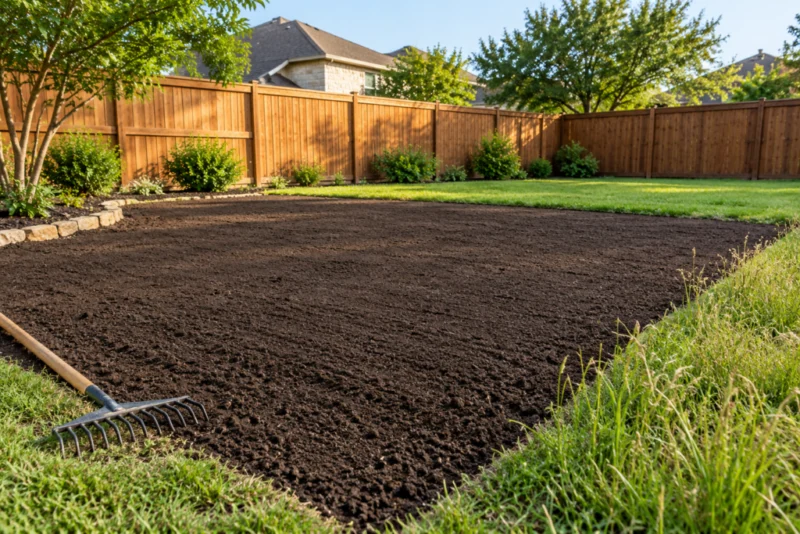
Photos are illustrative; no disease or customer outcome is identified from them. The 450-square-foot minimum is business-provided. This guide doesn’t prescribe a chemical treatment or guarantee lawn recovery.
Know someone planning a yard project?