You should understand the work without guessing
A landscaping estimate should identify the work area, planned work, materials, price and important exclusions. Before accepting it, also clarify scheduling, payment terms, changes and the condition in which the property will be left.
The Federal Trade Commission recommends written estimates describing the work, materials, completion date and price. It also recommends comparing estimates and asking about substantial price differences. That’s a useful starting point, not a landscaping specification or a substitute for reading your agreement.
Source: FTC guidance on hiring a home-improvement contractor.
For a Plano lawn project, “install new sod” leaves several questions open. Which areas? Which grass? What preparation? What happens to the old lawn? If a wet side yard needs additional work, is that included or still awaiting assessment? Clear answers make it easier to choose a contractor and prepare for installation.
Give the estimator a useful starting point

You don’t need a finished landscape design to request an estimate. Start with your address and the result you want. “We want usable grass where the pool used to be” is more helpful than choosing a material before the site has been reviewed.
Send the basics
- Property address, name, phone and email.
- Wide photos of the work area and its access route.
- Rough dimensions, if known; label them as approximate.
- Your main goal and preferred timeframe.
Flag things that affect the visit
- Standing water or areas that repeatedly struggle.
- Gates, steps and narrow passages.
- Existing irrigation and landscape lighting.
- Features to retain and any association requirements you know about.
If you’re undecided, say so. Asking to compare two grass types or two border materials is a reasonable starting point. Keep those alternatives identifiable so you know how each changes the proposed price.
Put competing proposals beside the same checklist
| Item | What to clarify | Example of an open question |
|---|---|---|
| Work boundaries | Front, back, side yard or marked areas. | Does the side strip beside the driveway count? |
| Removal | What is removed, hauled away or retained. | Is existing edging staying? |
| Preparation | The preparation actually proposed for this site. | Is additional grading included? |
| Materials | Type, variety, finish and relevant quantities. | Which Zoysia variety is being quoted? |
| Related work | Separate drainage, sprinkler or lighting changes. | Who moves the sprinkler head? |
| Restoration | Repair to disturbed areas and cleanup. | What happens to the access path afterward? |
| Price | Base work, options, applicable tax and payment terms. | Is that alternative included in the total? |
| Unresolved items | What needs inspection, selection or approval. | What could change before a final price is agreed? |
Use this as a conversation checklist, not a demand for a particular document format. A small lawn replacement and a multi-service renovation won’t need identical paperwork. Both should leave you clear about the work you’re authorizing.
A sod estimate: what the square-foot price leaves out
Plano Landscaping’s current starting installed rates are $2.35 per sq. ft. for Bermuda, $2.45 for St. Augustine and $2.55 for Zoysia, before tax. The installation minimum is one pallet, covering 450 sq. ft. These business-provided starting rates don’t price every property condition.
Illustrative starting calculation
For an estimated 1,000 sq. ft. of Bermuda: 1,000 × $2.35 = $2,350 before tax.
This is a budgeting example, not a property quote. Confirm the measured area and agreed preparation. Additional grading, drainage and irrigation work are separate.
Now imagine one proposal includes the front yard only and another includes a narrow side lawn. The larger total may simply cover more area. Or one proposal may identify sprinkler changes that the other has not discussed. Compare those differences before deciding that the grass itself is more expensive.
For a fuller budget, use the calculator and scope explanation in our sod installation cost guide. If you’re still choosing grass, compare light, use and maintenance in our Bermuda, St. Augustine and Zoysia guide.
Keep must-have work separate from optional improvements
A useful way to describe your project is in three parts: the problem you need solved, the finish you want now and improvements you may want later. This is our planning suggestion, not a rule that every project needs three phases.

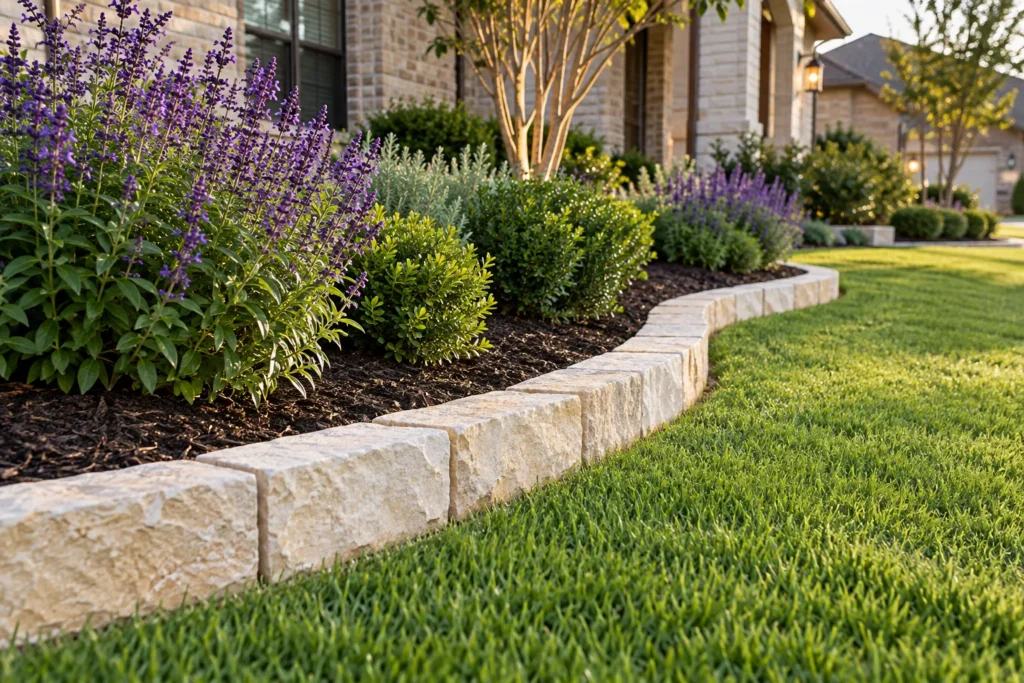
For example, your priority might be new sod, with Austin stone borders as an option. Ask for both scopes to be clear. If recurring standing water also needs evaluation, mention it at the start rather than treating it as a decorative upgrade.
The same approach works for a larger project. Explore outdoor living, deck building, removal and repair or artificial turf as specific alternatives. Use our current service directory to identify what you want discussed; you don’t need to request everything at once.
If the proposal involves drainage, our drainage comparison guide helps you ask why a particular approach has been recommended.
Use the wider plan to separate necessary work from later finishes: define hardscape and landscaping needs; plan the phases; compare landscaping materials.
Clarify the start, changes and finish
Before scheduling, ask which selections or approvals remain outstanding, how access will work and how weather-related changes are communicated. For a phased project, ask what the yard will look like between phases.
Agree on how extra work gets described and approved. If you change the layout or material after work starts, ask about the cost and schedule before going ahead. A conversation alone doesn't update the written agreement.
At handover, walk through the agreed work and ask about care, cleanup and any remaining items. For a new lawn, save the aftercare guide and confirm who will water it. For installed systems or materials, ask for the applicable instructions and written warranty terms instead of assuming every service carries the same coverage.
Ready to describe your project?
Send your address, photos and the job that matters most. List optional extras separately so we can plan around your priorities.
Request My Landscaping EstimateCommon estimate questions
Do I need exact measurements?
No. Approximate measurements can help start the conversation. Identify them as estimates and confirm the final area used in your proposal.
Should I tell you my budget?
It helps us talk through practical choices and priorities. You can also compare a smaller job with a larger project. You'll still need a written description of the work.
Can you quote several services together?
Yes. Identify your main goal and the related work you want considered. Ask for optional items to be distinguishable from the work you’re ready to authorize.
Is the cheapest estimate the best value?
Not necessarily. Compare the area, preparation, materials, related work and yard repairs first. The price difference means more once both quotes cover the same job.
Does the sod calculator give me a final quote?
No. The calculator gives you a starting budget from the area and grass choice. The property assessment and agreed work determine your project estimate.
Do I need to choose every finish before contacting you?
No. Tell us what you know and what you want help comparing. Confirm final material selections before authorizing the relevant work.
Sources and business details
FTC: How to Avoid a Home Improvement Scam supports the general recommendation to obtain written estimates and compare their contents. The project checklist and examples here are editorial planning suggestions tailored to Plano Landscaping’s services.
Starting sod prices and the 450-sq.-ft. minimum were supplied by Plano Landscaping. Confirm current pricing, preparation and exclusions in your written quote. The calculation and checklists are planning examples, not a contract, project quote or legal interpretation. Illustrations do not document a customer consultation.
Explore the Knowledge Hub →